
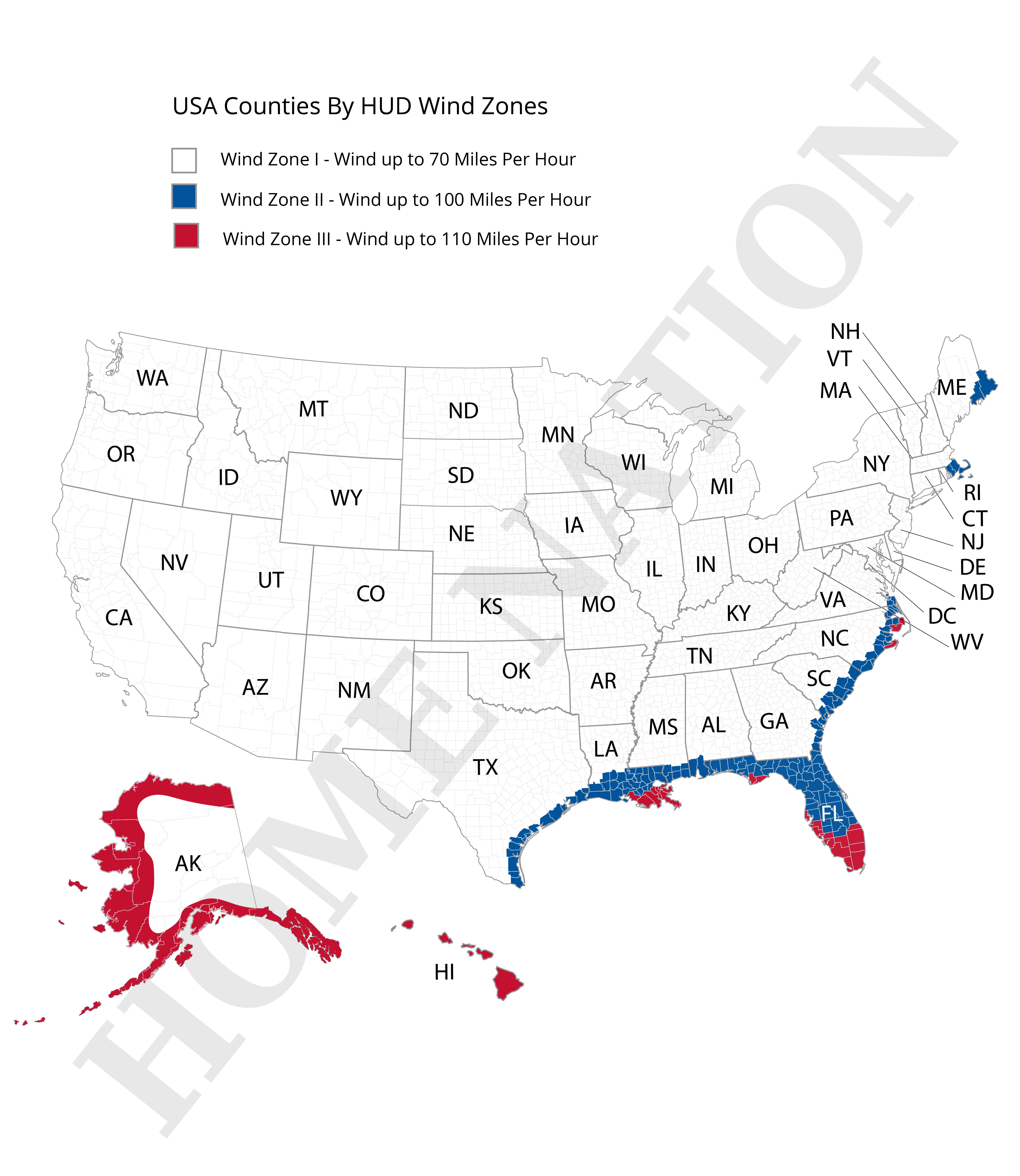
When shopping for a mobile home, one of the most important factors to consider is the wind zone where the home will be installed. Wind zones are safety ratings established by the Department of Housing and Urban Development (HUD) to ensure homes are built to withstand local wind speeds. Among the three zones, Wind Zone 3 represents the areas most vulnerable to high wind conditions.
Key Takeaways
-
Wind Zone 3 applies to coastal and hurricane-prone regions.
-
Homes in Zone 3 are built to withstand winds up to 110 mph.
-
Only certain states or coastal counties qualify as Zone 3.
-
Regulations prevent installing lower-rated homes in Zone 3 areas.
-
Knowing your zone helps you pick the right home and stay compliant.
What is Wind Zone 3?
Wind Zone 3 is the highest wind safety rating for manufactured homes in the United States. Homes built to this standard can withstand wind speeds of up to 110 miles per hour. This rating is not a suggestion but a requirement for any new home placed in a designated Zone 3 location. The regulation ensures that homes in hurricane-prone regions have the structural strength to resist strong coastal winds.
Related: Home Nation Delivers Where Others Can’t
Why Wind Zone 3 Matters for Mobile Home Buyers
If you live in a Zone 3 area, buying a home built for Zone 1 or Zone 2 isn’t allowed. The HUD code strictly prohibits it, and for good reason. A lower-rated home could suffer severe damage in a major storm, putting residents at risk. For buyers, this means compliance is non-negotiable. But it also brings peace of mind knowing your home is designed with extra reinforcements.
Buyers also need to consider future resale. A mobile home that matches its zone requirement will hold value better because it meets legal and safety standards. For investors or park owners, choosing the right wind zone home from the start avoids expensive relocation or retrofitting later.
Which States Are in Wind Zone 3?
Wind Zone 3 covers specific coastal areas where hurricanes and tropical storms are common. The majority of inland U.S. regions fall into Zone 1 or 2, but Zone 3 stretches along the Gulf and Atlantic coasts. Examples include:
-
Florida (entire state)
-
Coastal counties of Texas, Louisiana, Mississippi, and Alabama
-
Eastern coastal regions of North Carolina and South Carolina
-
Parts of coastal Georgia
-
Some southern areas of Virginia
Since these boundaries are county-specific, always verify your exact location with local authorities. For example, while Florida is entirely Zone 3, only the coastal counties of Texas qualify, not the entire state.
Related: What is Your Homes Wind Zone?
Regulations and Restrictions
HUD regulations require that any home placed in Zone 3 must be manufactured to Zone 3 standards. A Zone 2 home cannot be installed in a Zone 3 county, even if it seems more affordable. Conversely, a Zone 3-rated home can be placed in a lower zone, but that often adds unnecessary cost. This compliance framework protects homeowners, but it also prevents confusion in the housing market.
This is why factors like wind loads are part of every design. The stronger frame, tie-down systems, and roof construction are all tied to HUD’s safety code.
Practical Considerations for Buyers
Knowing your wind zone before you buy can save you from costly mistakes. For example, if you’re planning to move into Florida, you’ll need to look specifically for Zone 3 homes. If you’re in South Carolina but away from the coast, you may only need Zone 2. Matching the right rating with your location helps you stay compliant while avoiding unnecessary expense.
As you plan your purchase, you’ll also want to factor in other details such as home inspection cost. A proper inspection ensures your chosen home meets both HUD standards and local installation requirements.
Comparing Wind Zones
Understanding how Zone 3 compares with the others gives buyers a clearer picture. Zone 1 homes are built for wind speeds up to 70 mph, common across most of the interior United States. Zone 2 homes can handle up to 100 mph and cover inland areas of coastal states. Zone 3 tops the list at 110 mph, focusing on hurricane-prone counties. For more detailed side-by-side information, see HUD’s wind zone comparisons.

Choosing a Home in Zone 3 Areas
For anyone living in Zone 3, the good news is that many manufacturers, including Home Nation, build homes designed for these stricter standards. Buyers don’t need to go through the complicated process of becoming a dealer to access compliant models. Instead, you can work directly with companies that deliver factory-direct homes, often at competitive prices.
As you explore options, you might also be thinking about choosing land for your home. Factoring in wind zone compliance early ensures you don’t purchase land where your chosen home cannot be legally installed.
Related: Home Nation Delivers Where Others Can’t
Wind Zone 3 Mobile Homes
Mobile homes designed for Zone 3 include reinforced wall systems, roof trusses, and anchoring requirements that surpass other zones. While these homes may cost more upfront, they often save money in the long run by preventing storm damage. Home Nation provides buyers with access to these compliant models without requiring a dealer license, streamlining the purchase process.
This is also the stage where you might visualize your new home. Having clarity on wind zone requirements ensures that your dream home can be built and placed exactly where you plan.
If you’re looking for a Wind Zone 3 mobile home or want guidance on whether your location requires one, Home Nation can help. Get in touch with us today to review options and start planning your purchase: Contact Home Nation
Conclusion
Wind Zone 3 isn’t something mobile home buyers can ignore. It’s a safety and compliance requirement that directly affects which homes are available to you. By understanding the definition, states included, and regulations tied to Zone 3, you can make an informed decision. Whether you’re a family buying your first mobile home or a park owner adding to your community, choosing the right wind zone rating is the key to safety and long-term value.