If you're planning to buy or place a manufactured home in South Carolina, understanding wind zones isn't optional. It's a safety requirement that directly affects how your home is built, where it can be installed, and how it performs during storms.
South Carolina wind zones determine the structural standards your home must meet based on where it sits. Get this wrong and you could face permit denials, voided warranties, or worse, a home that can't handle the weather conditions in your area.
What Are Wind Zones?
Wind zones are geographic classifications created by the U.S. Department of Housing and Urban Development (HUD) in 1976. They divide the country into three zones based on recorded wind speeds and storm patterns.
Every manufactured home must be built to meet specific building codes for its designated zone. These zones aren't just technical details. They define how much wind pressure your home's frame, roof, and anchoring system can withstand.
Here's the basic rule: homes rated for Zone 1 can't legally be placed in Zone 2 or Zone 3 areas, but a home built for a higher zone can be installed in a lower one.
Related: What Is Windzone 2 - States Included and More
South Carolina's Two Wind Zones
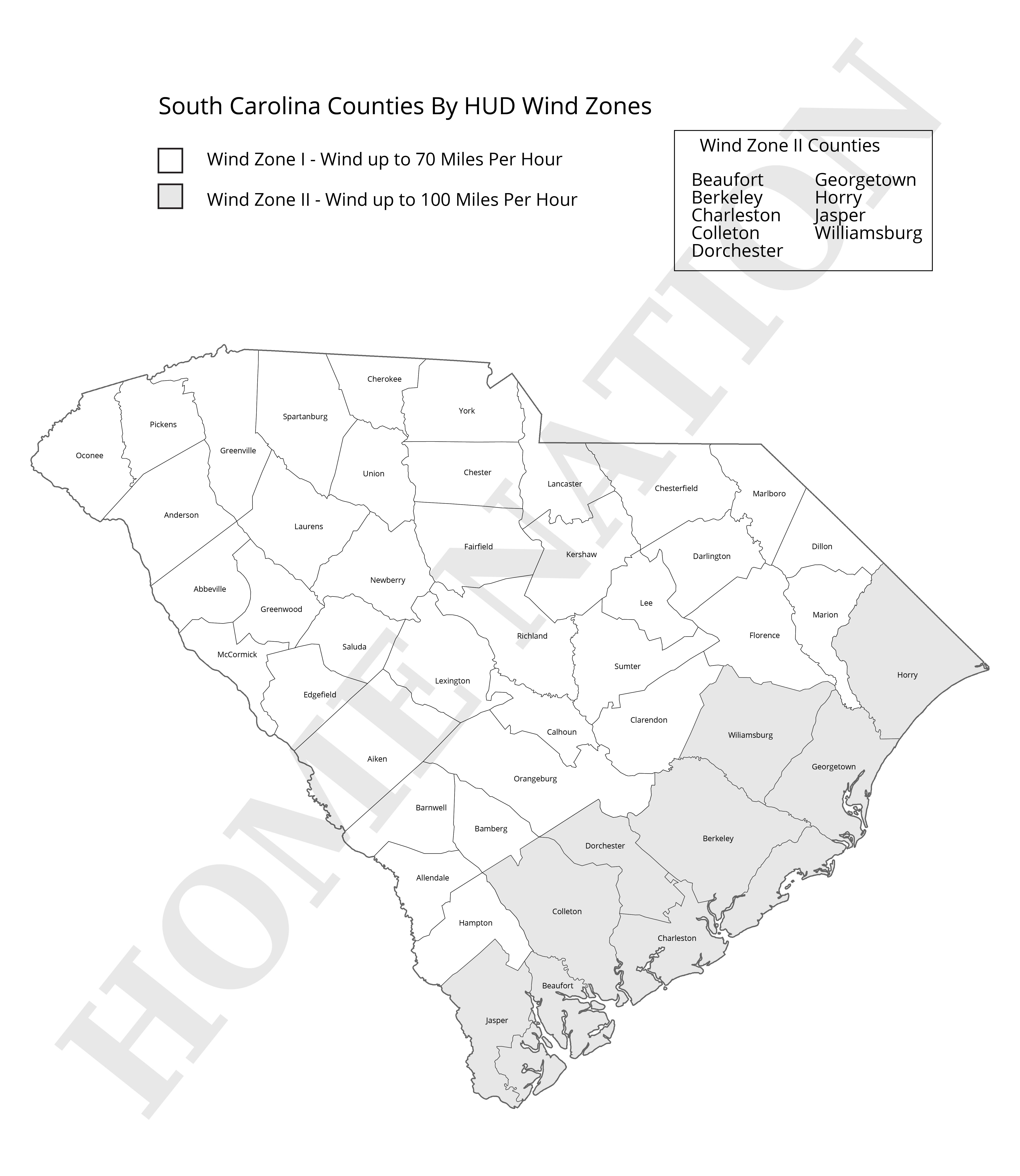
Zone 1: Interior Counties Most of South Carolina falls under Zone 1, which requires homes to resist wind speeds up to 70 mph. The interior counties, away from coastal influence, operate under these standards.
Wind zone 1 counties:
Abbeville Aiken Allendale Anderson Bamberg Barnwell Calhoun Cherokee Chester Chesterfield Clarendon Colleton (inland) Darlington Dillon Dorchester (inland) Edgefield Fairfield Florence Georgetown (inland) Greenville Greenwood Hampton Jasper (inland) Kershaw Lancaster Laurens Lee Lexington Marion Marlboro McCormick Newberry Oconee Orangeburg Pickens Richland Saluda Spartanburg Sumter Union Williamsburg (inland) York
Zone 2: Coastal Counties Nine coastal counties face higher wind risks from hurricanes and tropical storms. These counties must follow Zone 2 standards, requiring homes to withstand winds up to 100 mph.
Wind zone 2 counties:
-
Beaufort
-
Berkeley
-
Charleston
-
Colleton
-
Dorchester
-
Georgetown
-
Horry
-
Jasper
-
Williamsburg
South Carolina doesn't have any Zone 3 areas. Coastal fringes (e.g., barrier islands in Horry or Georgetown) may require Zone 3 standards (110+ mph), but no entire county is classified as such.

Why Wind Zones Matter in South Carolina
South Carolina sits in the Atlantic hurricane belt and regularly experiences tropical storms, nor'easters, and severe thunderstorms. Wind speed can vary dramatically between inland areas and the coast.
Coastal counties like Charleston, Myrtle Beach, and Hilton Head face the highest risk during storm season. Even inland counties can experience damaging winds from remnants of tropical systems that move through the state.
Proper wind zone ratings ensure your home's structural components can handle these conditions. For manufactured homes, this isn't a suggestion. It's federal law.
Related: What Is Windzone 3 - States Included and More
How Building Standards Differ Between Zones
Zone 1 Construction
Manufacturers design these homes with standard framing, roofing materials, and anchoring systems rated for 70-mph winds. These homes work well in most of South Carolina's inland counties.
Zone 2 Construction
These homes require serious upgrades:
-
Reinforced framing and stronger roof trusses
-
Enhanced sheathing and roofing materials
-
More robust tie-down systems
-
Heavier anchoring hardware
-
Stronger connection points between the frame and the ground
You can't substitute a Zone 1 home in a Zone 2 county. County permitting offices will check your home's data plate during the installation permit process. If the rating doesn't match, you won't get approval.
Insurance and Long-Term Safety
Insurance companies care about wind zones too. Homes in Zone 2 counties typically face higher premiums because of increased storm risk. Some insurers won't cover a home that isn't rated for its location's wind zone.
Beyond insurance, there's the practical issue of building resilience. A properly rated home protects your family during severe weather. It also holds its value better and reduces long-term repair costs.
Finding Your Home's Wind Zone Rating
Every manufactured home has a HUD data plate with its wind zone certification. Check these common locations:
-
Inside a kitchen cabinet
-
In a bedroom closet
-
Near the electrical panel
Can't find your data plate? Contact the Institute for Building Technology and Safety to request a replacement.
Before purchasing land or moving a home, call your county's building or permitting office to confirm the required wind zone. Don't assume based on location alone.
If you're comparing site-built homes for South Carolina and mobile homes, both follow wind zone standards. The difference is that HUD governs manufactured homes at the federal level, while site-built homes follow state and local codes.
Ready to Move Forward?
Get preapproved at homenation.com/preapproval or explore your options at homenation.com/sell-your-home.
South Carolina Wind Zone Mobile Homes
When shopping for a home in South Carolina, make sure it's rated for your county's wind zone. Home Nation offers homes built to meet both Zone 1 and Zone 2 requirements. Whether you're in Columbia or Charleston, you can find a home engineered for your location.
Understanding mobile home wind zones helps you make informed decisions. South Carolina wind zones protect homeowners by ensuring every manufactured home can handle the weather conditions where it's placed. Don't skip this step. It's the foundation of safe, compliant homeownership.