When you're shopping for a mobile home, you'll come across something called a Wind Zone rating. It's not optional, it's not just a suggestion, and you can't pick a home designed for one zone and stick it in another. Wind Zone 2 homes are built for specific areas, and if you're buying land or a home in those regions, this matters more than you think.
Key Takeaways
-
Wind Zone 2 homes are designed to withstand wind speeds up to 100 mph.
-
Most Zone 2 areas are located along coastal regions where higher winds are common.
-
You cannot install a Zone 2 home in a Zone 3 area due to compliance and safety regulations.
-
Every mobile home includes a data plate that specifies which wind zone it's rated for.
-
Understanding your area's wind zone is essential before buying a mobile home.
What Exactly Is Wind Zone 2?
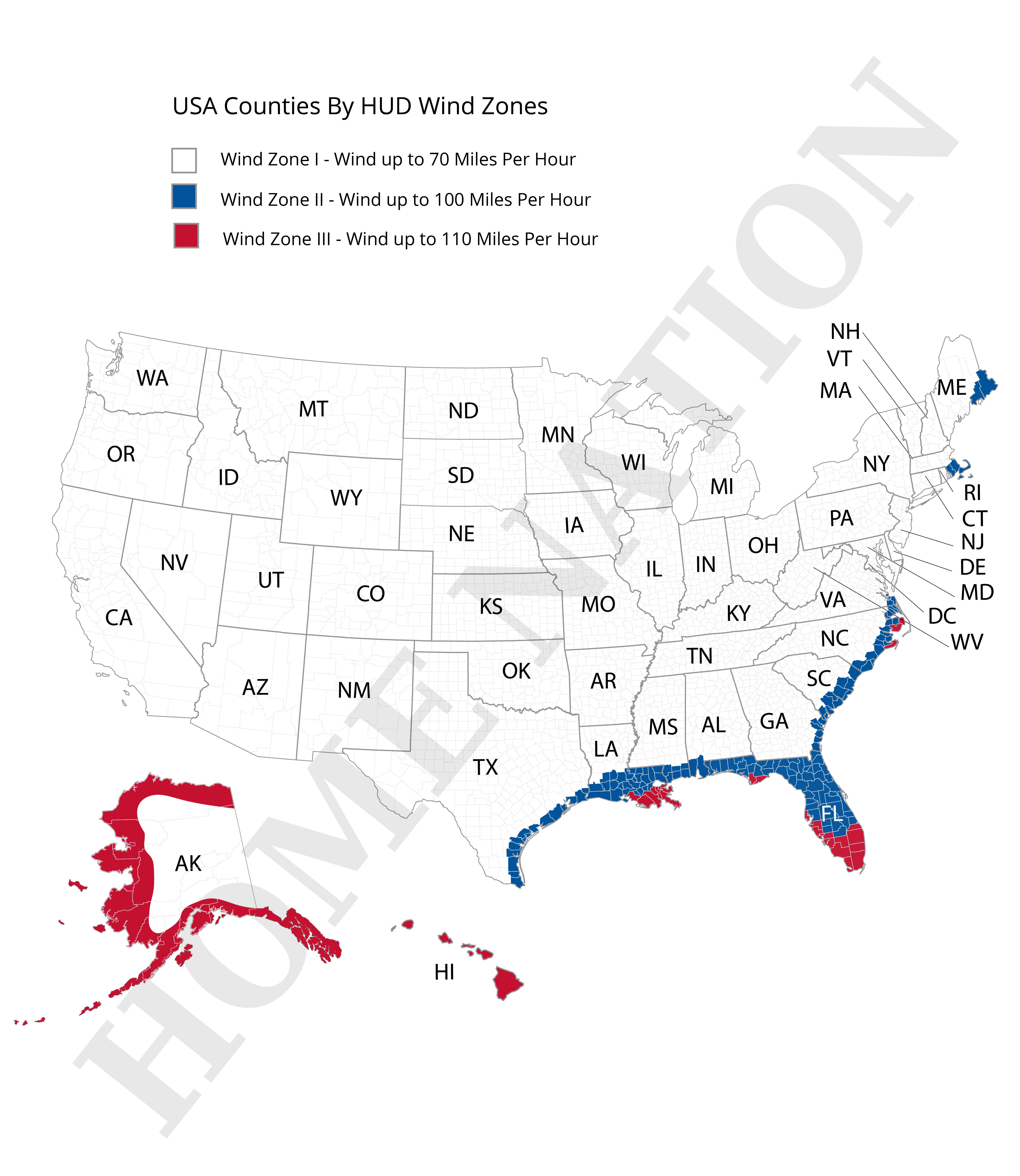
Wind Zone 2 refers to areas where wind speeds can reach up to 100 mph during severe weather events. The U.S. Department of Housing and Urban Development (HUD) divides the country into three wind zones based on historical wind data and risk assessments. Zone 1 is the lowest (up to 70 mph), Zone 2 sits in the middle (up to 100 mph), and Zone 3 is the highest (110 mph and above).
Mobile home manufacturers are required to build homes that meet these standards. That means a Zone 2 home has reinforced structural components, stronger anchor systems, and materials designed to handle higher wind pressure than a Zone 1 home. It's not a marketing claim. It's a federal requirement.
Related: Home Nation Delivers Where Others Can't
Which States Are in Wind Zone 2?
Zone 2 covers a lot of the U.S., particularly areas close to the coast. If you're looking at property near the Atlantic or Gulf Coast, chances are you're in Zone 2 territory. States with significant Zone 2 areas include:
-
North Carolina
-
South Carolina
-
Georgia
-
Alabama
-
Mississippi
-
Louisiana
-
Texas (coastal regions)
-
Virginia (coastal areas)
-
Maryland (eastern shore)
-
Delaware
Some inland areas also fall into Zone 2, especially in regions prone to severe storms or hurricanes. The exact boundaries shift based on local topography and weather patterns, so you can't rely on state lines alone. Check the official wind zone comparisons for your specific county.
Related: What is Your Homes Wind Zone?
Why Wind Zone 2 Matters for Mobile Home Buyers
Here's the thing. You can't just buy a Zone 1 home and drop it in a Zone 2 area because it's cheaper. Local building inspectors will flag it. Lenders won't approve financing. And if a storm rolls through, your insurance company might not cover the damage if you knowingly installed a home in the wrong zone.
When choosing land for your home, wind zone compliance is one of the first things you need to verify. Land might be cheap, but if you can't legally install the home you want, it doesn't matter. You'll either need to upgrade to a Zone 2-compliant home or look elsewhere.
Structural differences between Zone 1 and Zone 2 homes aren't minor. Engineers calculate wind loads differently for each zone, which affects everything from wall thickness to roof truss design to foundation anchoring. These changes increase the cost of a Zone 2 home compared to a Zone 1 model, but they also make it significantly safer in high-wind conditions.
How to Check Your Home's Wind Zone Rating
Every manufactured home comes with a data plate, usually mounted inside a kitchen cabinet, bedroom closet, or near the electrical panel. This plate lists the wind, thermal, and snow load zones the home is designed for. If you can't find it, contact the manufacturer or request a replacement through the Institute for Building Technology and Safety (IBTS).
Before you commit to a new home, double-check that its wind zone rating matches your property location. Don't assume. Verify. The home inspection cost is a small price to pay compared to the financial and safety risks of getting this wrong.

Wind Zone 2 Mobile Homes at Home Nation
At Home Nation, we stock Zone 2-compliant homes and can help you figure out exactly what you need based on where you're building. If you're in a coastal area or a region prone to tropical storms, you're probably looking at Zone 2. We'll walk you through the compliance requirements, show you models that meet the standards, and make sure you're not buying something that won't pass inspection.
We also understand that upgrading to a higher wind zone home adds cost. But cutting corners here doesn't make sense. A Zone 2 home gives you peace of mind when storm season hits, and it protects your investment long-term.
What You Can't Do with Wind Zone 2 Homes
You can't install a Zone 2 home in a Zone 3 area. The regulations don't allow for downgrades. If your property requires Zone 3 compliance, you need a Zone 3 home. No exceptions.
On the flip side, you can install a Zone 2 home in a Zone 1 area. That's called over-engineering, and while it costs more upfront, some buyers prefer the extra durability. If you plan to keep the home for decades or expect climate patterns to shift, it's not a bad call.
Ready to Find Your Zone 2 Home?
If you're looking for a mobile home in a Zone 2 area, don't guess. Don't assume. And definitely don't try to save money by installing a home that doesn't meet local requirements. Check your county's wind zone, confirm your home's compliance, and work with someone who knows the regulations.
Home Nation can help you navigate this process and find a home that fits both your budget and your location. Get in touch to start the conversation, or browse our Zone 2 inventory to see what's available.