If you're planning to buy a manufactured home in Alabama, understanding wind zone requirements isn't optional. Alabama wind zones determine how your home is built, what materials are used, and how it's anchored. Getting this right saves you from permit issues, insurance problems, and safety risks.
What Are Wind Zones?
Wind zones are geographic areas defined by the U.S. Department of Housing and Urban Development (HUD) based on maximum wind speeds in each region. HUD established these zones in 1976 as part of the Manufactured Home Construction and Safety Standards to ensure every manufactured home can withstand the weather conditions where it'll be placed.
The system divides the country into three categories:
-
Wind Zone 1: Homes must withstand winds up to 70 mph
-
Wind Zone 2: Homes must resist winds up to 100 mph
-
Wind Zone 3: Homes must handle winds up to 110 mph
Each zone requires different structural features, from roof design to wall thickness to anchoring systems. When choosing land for your home, you need to know which zone applies to that location before you start the buying process.
Alabama Wind Zone Classifications
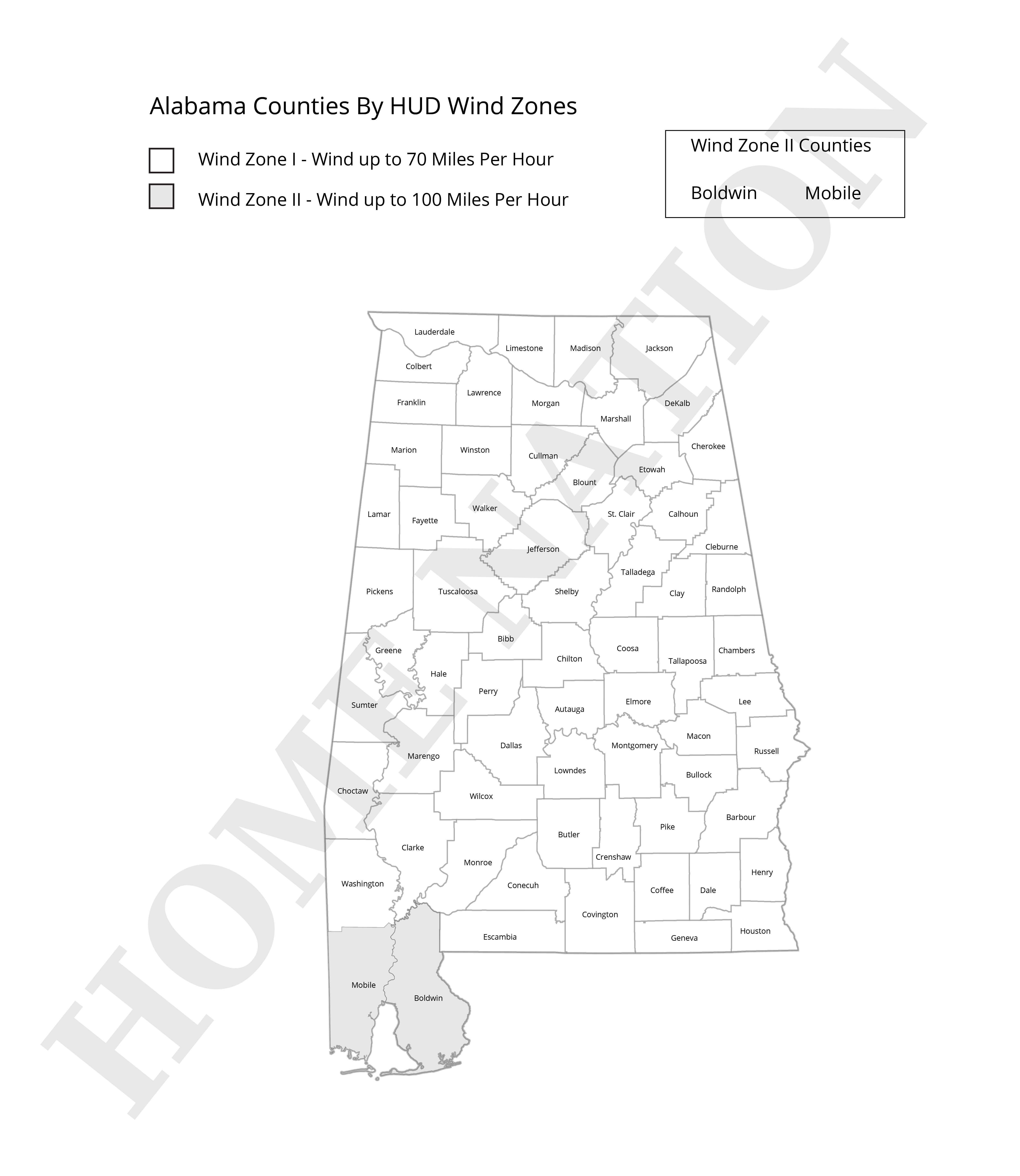
Alabama has two distinct wind zone designations. Most of the state falls into Wind Zone 1, covering all counties in the northern, central, and eastern parts of Alabama. This includes major cities like Birmingham, Montgomery, Huntsville, and Tuscaloosa.
Baldwin and Mobile counties sit along the Gulf of Mexico and are classified as Wind Zone 2. These coastal areas face stronger winds because of their proximity to the Gulf, where tropical storms and hurricanes can make landfall. The difference in wind loads between these zones affects everything from construction costs to insurance rates.
Here's the important part: you can't place a Wind Zone 1 home in Baldwin or Mobile counties. It won't meet code requirements. However, you can place a Wind Zone 2 home anywhere in Alabama. Higher-rated homes exceed the requirements for lower zones.
Wind Zone 1 counties:
Related: Complete Guide to Mobile Home Wind Zones by State
.png)
Why Alabama Wind Zones Matter
Getting your wind zone right affects more than just compliance. It impacts your home's structural integrity, insurance coverage, and family safety. HUD regulations require each manufactured home to be designed for the specific zone where it'll be installed.
When you're buying a mobile home, the wind zone rating determines construction features like reinforced framing, window strength, and anchoring systems. These are structural requirements designed to keep your home intact during severe weather.
Insurance companies verify wind zone compliance before issuing policies. If you're in coastal counties, expect your insurer to confirm your home meets Wind Zone 2 standards. The home inspection cost may be higher in Wind Zone 2 areas because inspectors verify additional safety features.
Alabama's Storm Patterns
Alabama's Gulf Coast location makes it vulnerable to tropical weather systems. Hurricane season runs from June through November, with peak activity in August and September. Coastal counties face the most intense conditions, but storms often move inland and affect areas throughout the state.
Hurricane Frederic in 1979 brought sustained winds of 130 mph when it made landfall at Dauphin Island. Hurricane Sally hit Gulf Shores in 2020, causing significant flooding and wind damage. Even tropical storms that weaken inland can bring damaging wind gusts to Wind Zone 1 areas.
These patterns explain why Alabama wind zones exist. The different requirements between inland and coastal areas reflect real differences in storm exposure.
Alabama Wind Zone Mobile Homes
Ready to get preapproved for your Alabama manufactured home? Visit Home Nation's preapproval page to start the process. If you're looking to upgrade, check out options to sell your current home and move into a new home that meets your area's wind zone requirements.
Home Nation offers manufactured homes built to meet both Wind Zone 1 and Wind Zone 2 specifications. Whether you're in Birmingham or Baldwin County, you'll get a home engineered for your location's requirements. All homes comply with HUD standards and include proper anchoring systems for Alabama's climate.
For technical specifications, review wind zone comparisons to understand how different zones affect construction. The key is matching your home to your location before you break ground.