
 If you're buying a manufactured or mobile home in Georgia, wind zones aren't just another regulation. They're a critical safety requirement that protects your home and family. Understanding Georgia wind zones helps ensure your home can withstand local wind conditions and meet all federal compliance standards.
What Are Wind Zones?
Wind zones are geographic classifications created by the U.S. Department of Housing and Urban Development (HUD) in 1976. These zones divide the country based on the maximum wind speeds that homes need to withstand.
Coastal regions face hurricane threats with sustained winds exceeding 100 mph, while inland areas typically experience milder conditions. Wind zones ensure manufactured homes are built with appropriate materials and structural reinforcements.
Georgia's Wind Zone Classifications
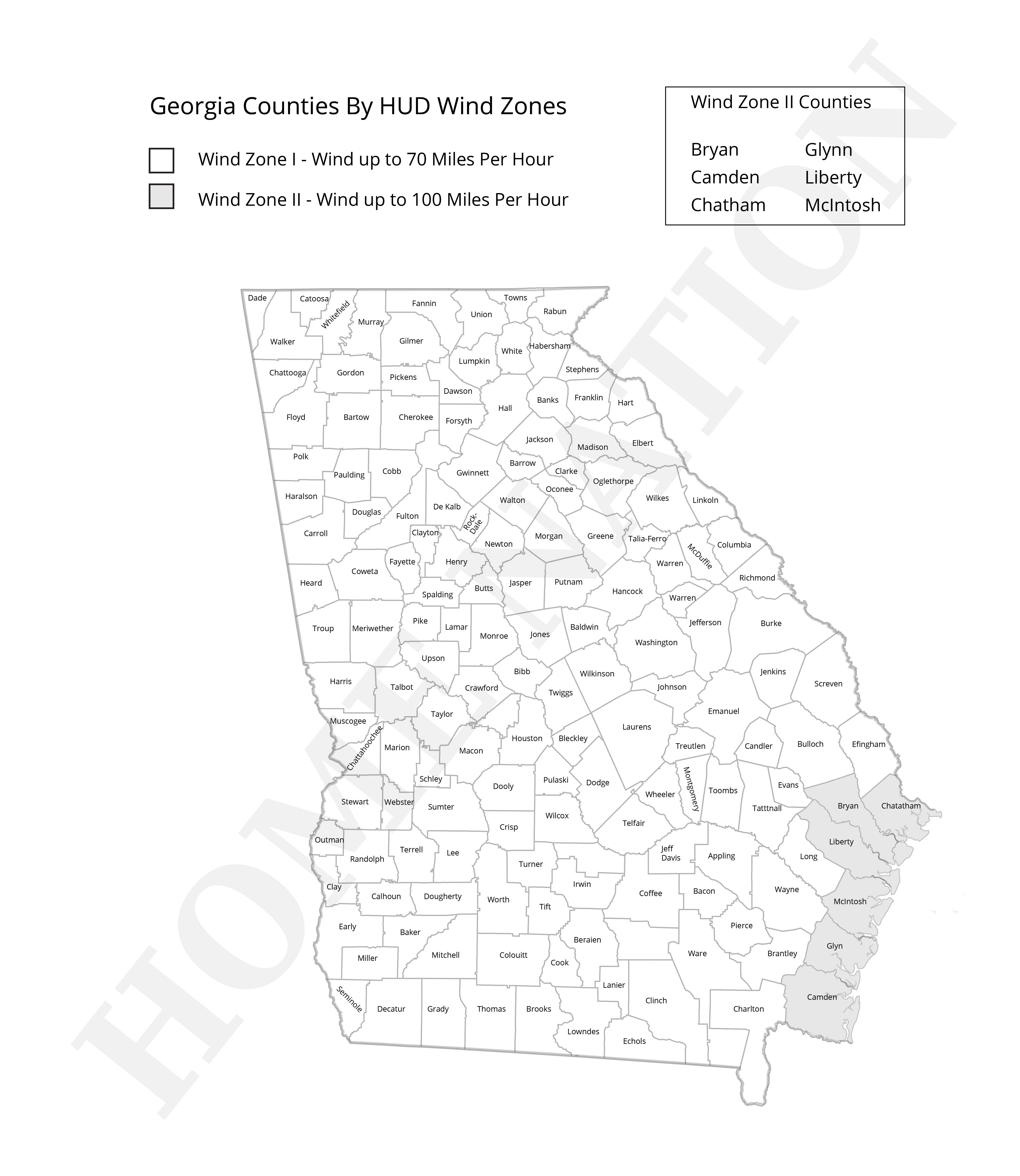
Wind Zone 1 covers most of Georgia and requires homes to withstand wind speeds up to 70 mph. This includes Atlanta, Macon, Augusta, Columbus, and all inland counties.
Wind Zone 1 counties:
Wind Zone 2 applies only to six coastal counties where homes must resist winds up to 100 mph.
Wind Zone 2 counties:
-
Chatham
-
Bryan
-
Liberty
-
McIntosh
-
Glynn
-
Camden
Georgia has no Wind Zone 3 locations. That classification is reserved for areas with the highest hurricane risks.
.png)
Why Wind Zones Matter
Wind zone ratings directly impact how your home is designed, constructed, and anchored. A home built for Wind Zone 1 uses different materials, roof systems, and tie-down configurations than one built for Wind Zone 2.
You can't place a home rated for a lower wind zone in an area with higher requirements. If you install a Wind Zone 1 home in a coastal Zone 2 county, you'll violate HUD regulations, face permit denials, void your warranty, and put yourself at risk during storms.
However, a Wind Zone 2 home can be installed anywhere in Georgia. Understanding Georgia wind zones also affects insurance premiums, with properly rated homes potentially qualifying for better rates.
Georgia's Wind and Storm Patterns
Georgia's 110-mile coastline means fewer direct hurricane landfalls compared to neighboring states. Still, the state isn't immune to tropical weather impacts.
Between 1851 and 2008, 29 hurricanes affected Georgia's coastal region. The Sea Island Hurricane of 1893 caused 1,000 to 2,000 deaths. The 1898 hurricane hit Cumberland Island with 135 mph winds.
Hurricane Matthew in 2016 brought hurricane-force winds and over 12 inches of rain to coastal areas. Hurricane Katrina's remnants spawned 18 tornadoes across Georgia in 2005. Tropical Storm Alberto in 1994 dropped up to 25 inches of rain in less than 24 hours.
Scientists who study offshore wind speed patterns note that southeast wind conditions contribute to the state's weather variability, though offshore wind energy development remains limited.
Related: Cost to Buy a Mobile Home in Georgia
Finding Your Home's Wind Zone Rating
Every HUD-certified manufactured home includes a data plate permanently attached inside. Common locations include:
-
Kitchen cabinets
-
Bedroom closets
-
Near the electrical panel
Can't find it? Request a replacement from the Institute for Building Technology and Safety (IBTS) using your home's serial number from the HUD Certification Label.
Before purchasing land or moving a home, contact your county building department to confirm the exact wind zone classification for your address.
How Wind Zones Affect Building Standards
Zone 2 homes use heavier gauge steel framing, reinforced roof trusses, impact-resistant windows, and more robust anchoring systems than Zone 1 homes.
HUD requires multiple oversight layers. An authorized agency approves the structural design, in plant inspections verify manufacturing, the manufacturer certifies the home, and state supervisors conduct final checks.
Home builders in Georgia who specialize in manufactured housing understand these requirements. The cost to build a house in Georgia varies based on wind zone ratings, with Zone 2 homes costing more due to enhanced requirements.
For buyers considering site-built homes in Georgia, wind zone considerations still apply, though different codes govern traditional construction.
Related: Planning on Moving to Georgia? Here Are Some Tips to Help Relocate
Georgia Wind Zone Mobile Homes
Ready to explore options? Visit https://homenation.com/preapproval to get started with financing or https://homenation.com/sell-your-home to sell or trade.
Home Nation specializes in factory-direct manufactured homes built to meet HUD wind zone standards for every region in Georgia. Whether you need Zone 1 or Zone 2, they offer transparent pricing and nationwide shipping. Their homes meet all federal and state building codes, ensuring compliance and safety.
Understanding Georgia wind zones is essential. Before you buy, confirm your location's wind zone and verify your home's rating matches that requirement.