
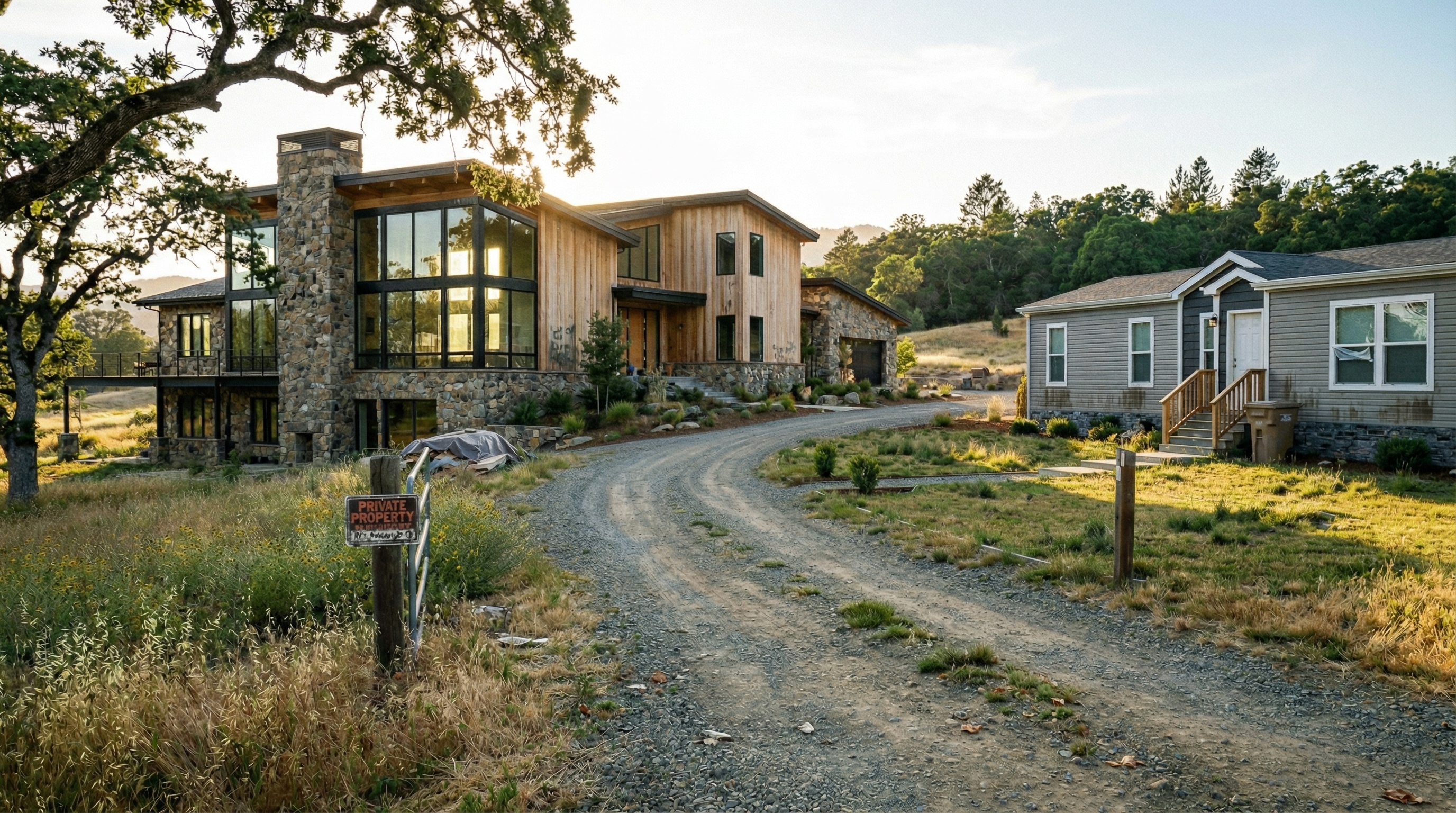
If you own land and want to put a home on it, the choice between a custom build and a manufactured home comes up fast. Both are legitimate paths, but they work very differently. The right one depends on your budget, your timeline, and how much involvement you want in the process. Here's an honest breakdown so you can decide with confidence.
Key Takeaways
-
A custom build gives you full design control but typically costs more and takes longer to complete.
-
Manufactured homes are built to federal HUD standards and can be placed on private land.
-
Speed is a major advantage for manufactured homes, often weeks to move-in instead of months.
-
Both options have financing paths, though loan types and eligibility requirements differ.
-
Home Nation offers both manufactured and modular homes for land buyers with factory-direct, transparent pricing.
What Is a Custom Build?
A custom build, also called a site-built or stick-built home, is constructed from the ground up on your property. A contractor frames it piece by piece and you're involved in every decision, from the floor plan to the finishes. That control is the main appeal.
The downside is cost and time. Site-built homes run higher per square foot than manufactured options, and timelines are hard to predict. The full process of building a home on your own land includes permits, site prep, foundation work, and contractor coordination, all of which add to the final cost.
What Is a Manufactured Home?
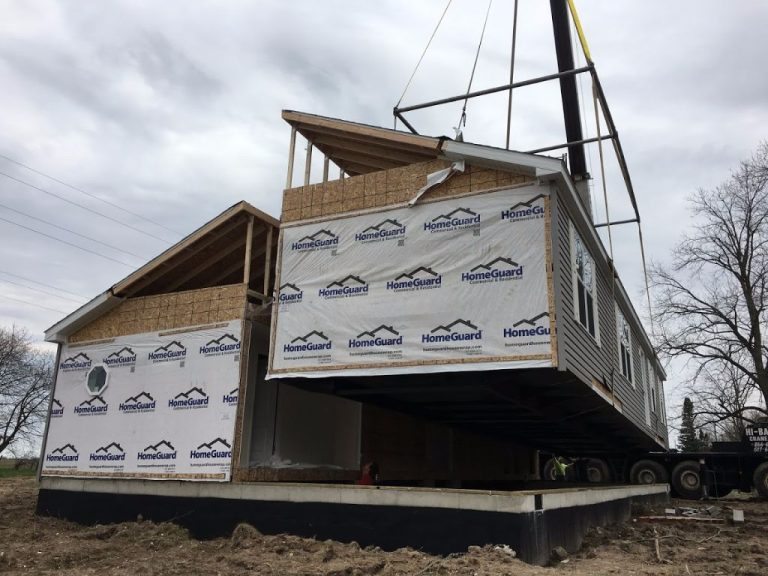
A manufactured home is built in a factory, then transported and set up on your property. Modern manufactured homes are built to federal HUD standards, covering structural integrity, fire safety, and electrical systems nationwide. Floor plan options have expanded considerably.
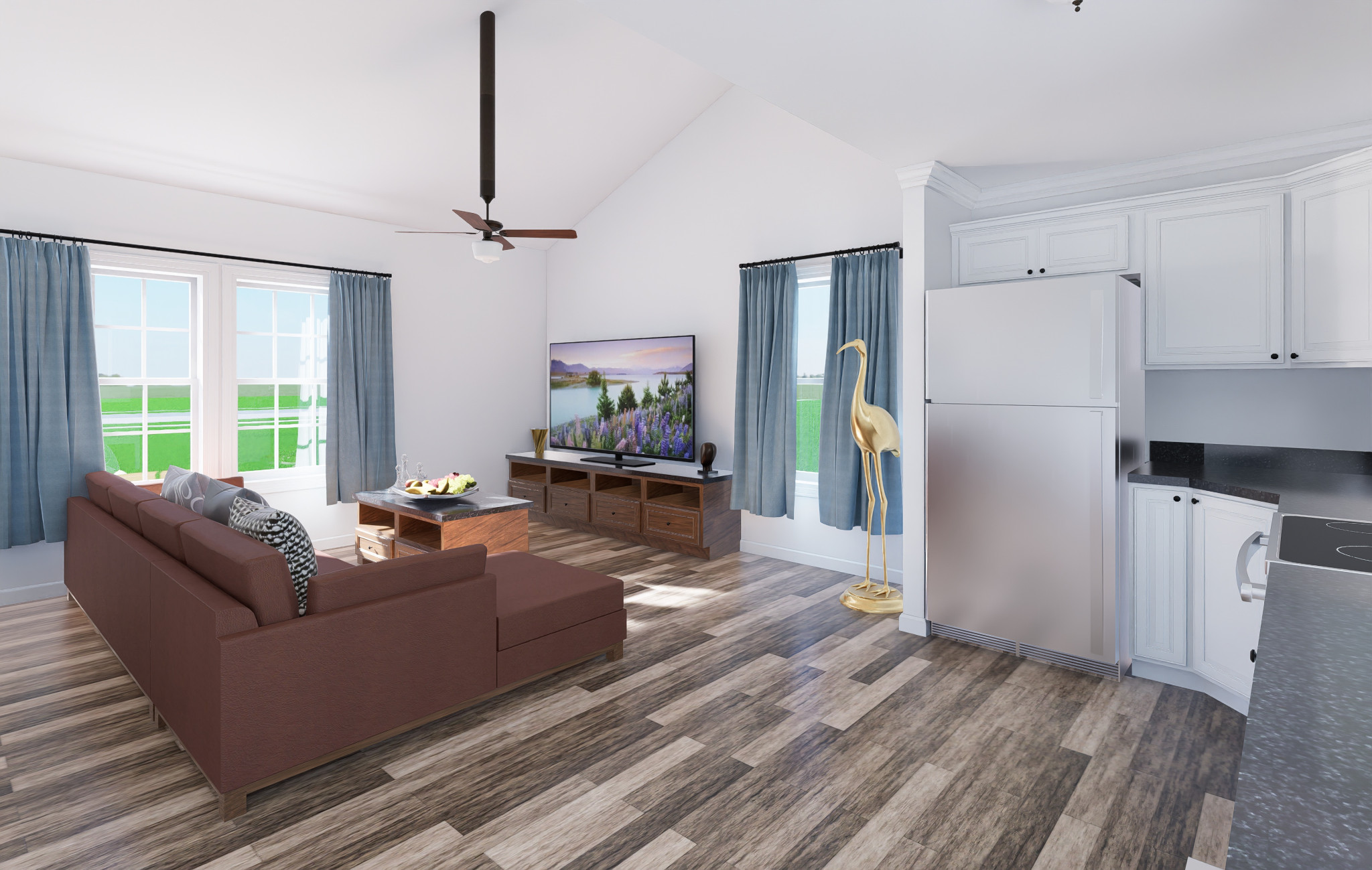
Single-wide, double-wide, and triple-wide configurations are all available, many featuring open kitchens, vaulted ceilings, and walk-in closets. Comparing mobile vs modular homes can help you sort out which factory-built category fits your situation. Speed is the biggest practical edge. From order to move-in, the process often takes weeks rather than months.
Cost Comparison: Where the Numbers Land
Per square foot, manufactured homes consistently cost less than site-built construction. Custom builds in the US can range from $150 to $300 or more depending on region, materials, and local labor rates. Factory-built homes typically come in well below that range, especially when bought factory-direct.
Custom builds also carry costs that don't show in early estimates, such as foundation work, permits, and finish upgrades. A clear look at custom home vs manufactured home pricing before you commit is worth the effort. Site-built homes tend to appreciate faster in stick-built markets.
Related: Modular Vs Stick Built Homes
Pros and Cons of a Custom Build
Pros
-
Full control over design, layout, and materials
-
Aligns with local market expectations and may support resale value
-
Permanent, foundation-set construction with stronger appreciation potential in many markets
Cons
-
Higher cost per square foot and less predictable timelines
-
Significant contractor coordination required (a stick built vs manufactured home comparison shows just how hands-on the custom route is)
-
Vulnerable to weather delays, labor shortages, and supply chain disruptions
Pros and Cons of a Manufactured Home
Pros
-
Lower upfront cost and faster from order to move-in
-
Factory-controlled quality built to federal HUD standards
-
Can be placed on private land with proper site preparation
Cons
-
Appreciation can be slower in markets where stick-built homes are standard
-
Fewer conventional loan options in certain financing scenarios
-
Zoning restrictions vary by county, and floor plan flexibility is more limited than a full custom build
Related: Manufactured Modular and Site Built Homes
Financing: What to Expect From Each Path
Custom builds are typically financed through a construction loan that converts to a traditional mortgage once the home is complete. Since the home doesn't exist yet as collateral, lenders require more documentation and oversight throughout the build. Manufactured homes have their own loan products.
A permanent foundation and real property classification may qualify the home for a conventional mortgage. If it's on leased land or titled as personal property, chattel loans are more common. Knowing how modular vs site built homes are treated differently by lenders helps you find the right loan type. Home Nation offers financing for all credit types.
Ready to explore your options? Browse the full selection of modular homes for land buyers at Home Nation and see real, factory-direct pricing.
How Home Nation Fits Into the Picture
Home Nation is a family-owned, factory-direct dealer offering manufactured, modular, and prefabricated homes for buyers placing a home on their own land. Whether you want the speed and lower cost of a manufactured home or you're exploring modular options as a step between factory-built and fully custom, there are floor plans for a wide range of budgets. The company ships nationally, connects buyers with local contractors for site prep and installation, and offers an online estimator with real photos and transparent pricing.

Which Option Is Right for Your Land?
Three things usually drive this decision: budget, timeline, and how much oversight you want. If you have the time and money for something fully custom and want a home built around your exact vision, a site-built home delivers that.
If you need quality on your land faster and at a lower cost, manufactured or modular is a smart choice. Check local zoning before committing since some counties restrict where manufactured homes can be placed. Home Nation's build on my land page walks you through what to expect at each stage.
When you're ready to take the next step, visit Home Nation's land-to-home placement guide for a step-by-step look at how the process works on your property.
The Bottom Line
There's no objectively better choice between a custom build and a manufactured home. Both can result in a quality home on your land. The decision comes down to budget, timeline, and how much process you want to manage.
Run the real numbers, factor in your local market, and don't let outdated assumptions push you toward a more expensive path than you actually need. Home Nation makes it easy to explore both sides, from floor plans to financing.