
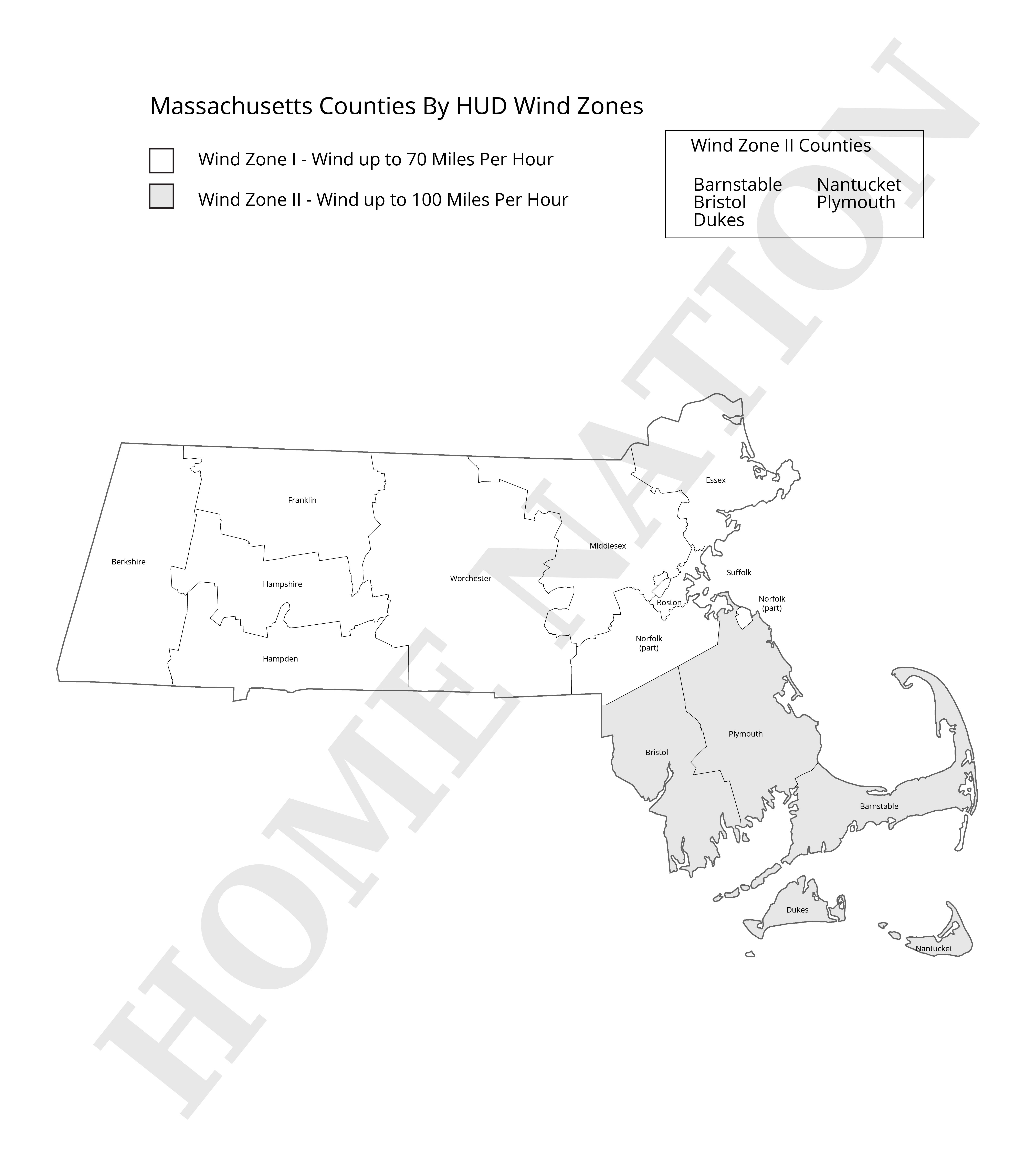
If you're planning to buy or install a manufactured home in Massachusetts, understanding Massachusetts wind zones isn't optional. It's required. The U.S. Department of Housing and Urban Development (HUD) created wind zone classifications to make sure manufactured homes can handle the specific wind conditions where they'll be installed. Get this wrong, and you could face installation delays, permit denials, voided warranties, or worse yet, a home that's unsafe during severe weather.
What Are Wind Zones?
Wind zones define how much wind pressure a manufactured home must withstand based on its location. HUD established three wind zone ratings in 1976 as part of the Manufactured Home Construction and Safety Standards (commonly called the HUD Code). These zones dictate structural requirements, from frame reinforcement to roof assembly and anchoring systems.
The three wind zones work like this:
-
Wind Zone 1: Homes built to resist winds up to 70 mph
-
Wind Zone 2: Homes designed for 100 mph winds
-
Wind Zone 3: Homes engineered to handle 110 mph winds
The difference isn't just about numbers. It affects how manufacturers design, build, and anchor your home to the ground. You can't install a Zone 1 home in a Zone 2 area because that violates HUD regulations and puts everyone at risk. However, a home built to higher standards (Zone 2 or 3) can be placed in a lower zone without issue.
Massachusetts Wind Zone Classification
Massachusetts sits in two distinct wind zones depending on where you're looking. Most of the state falls into Wind Zone 1, which covers interior counties away from the coast. These areas typically don't experience hurricane-force winds or extreme coastal storms, making them suitable for homes built to the 70 mph standard.
Wind Zone 2 applies to Massachusetts' coastal counties, where Atlantic storms and nor'easters bring stronger winds. According to HUD documentation, these Massachusetts counties are classified as Wind Zone 2.
Wind zone 2 counties:
-
Barnstable
-
Bristol
-
Dukes
-
Nantucket
-
Plymouth
All other Massachusetts counties fall into Wind Zone 1. If you're choosing land for your home in Massachusetts, knowing which zone you're in is critical before you buy.
Wind zone 1 counties:
-
Berkshire
-
Essex
-
Franklin
-
Hampden
-
Hampshire
- Middlesex
-
Norfolk
-
Suffolk
- Worcester
Related: Complete Guide to Mobile Home Wind Zones by State
.png)
Why Massachusetts Wind Zones Matter
Massachusetts experiences varied weather patterns throughout the year. The state sees nor'easters during winter and early spring, tropical storms and occasional hurricanes during late summer and fall, and strong wind events across all seasons. Coastal areas face the highest risk, especially Cape Cod and the Islands, where storms can bring sustained high winds and gusts exceeding 100 mph.
Interior regions are generally safer from extreme wind events, but they still experience strong thunderstorms and occasional severe weather. That's why Massachusetts wind zones exist. They make sure your manufactured home can handle what nature throws at it, regardless of where you live in the state.
Wind zone ratings directly impact your home's safety and structural integrity. They also affect insurance premiums, permit approvals, and resale value. Understanding wind loads helps you grasp why these standards matter so much.
How to Find Your Home's Wind Zone
Each manufactured home approved by HUD comes with a data plate showing its wind zone designation. This label, often placed near the electrical panel, inside a cabinet, or in a bedroom closet, lists details such as the model, manufacturer, and serial number, along with the specific wind zone the home was built and certified for.
Can't find your data plate? You can request a replacement from the Institute for Building Technology and Safety (IBTS). You can also contact your county building department or permitting office to verify the wind zone classification for your specific address or parcel. This step is especially important in Massachusetts because coastal and inland areas have different requirements.
Before you purchase a manufactured home, verify your location's exact wind zone. Don't assume. Some areas near zone boundaries might surprise you. For reference, you can review official wind zone comparisons to understand how different regions stack up.
Related: Find The Best Hurricane-Proof House Plans Of The Year

Building Standards and Safety
HUD takes manufactured home safety seriously. Every home must pass multiple inspections and tests before it's approved for installation. The agency requires authorized testing from design approval of load-bearing components to in-plant manufacturing inspections. This multi-layer approach makes sure your home meets all structural requirements for its designated wind zone.
Modern manufactured homes built to HUD standards are significantly safer than older mobile homes. The regulations updated in the 1990s incorporated new data on wind safety, making today's homes more resilient. Many newer homes can even rival hurricane-proof site-built homes in terms of structural integrity when properly installed.
The importance of building resilience can't be overstated. Your home is your biggest investment, and making sure it's built to the right standard protects both your family and your finances.
Massachusetts Wind Zone Mobile Homes
When you're ready to buy a manufactured home in Massachusetts, work with a provider who understands local wind zone requirements. Home Nation offers factory-direct mobile homes built to meet HUD standards for all wind zones. Whether you're in coastal Plymouth County or interior Worcester County, they can help you find a home that's engineered specifically for your location.
Before installation, factor in additional costs like the home inspection cost, which varies based on your home's size and location. A thorough inspection confirms your home meets all wind zone requirements and local building codes.
Ready to explore your options? Get started with a preapproval to understand your budget, or if you already own a manufactured home and want to upgrade, find out how you can sell your home and transition to a home that better fits your needs.