
Georgia has its own state-level framework for tiny houses, but whether it applies to your build depends heavily on where in the state you are buying. The Georgia Department of Community Affairs approved a Tiny House Appendix, based on the IRC's Appendix Q, for homes of 400 square feet or less on a permanent foundation. As an appendix, though, it is optional for individual counties and cities to adopt, so the same floor plan can be treated differently just a few miles apart.
This list breaks down the tiny home builders worth calling in Georgia, starting with the option most buyers overlook.
Key Takeaways
-
Georgia's Tiny House Appendix, based on IRC Appendix Q, only applies where the local county or city has formally adopted it.
-
Tiny homes on wheels are generally regulated as RVs, separate from permanent, foundation-built tiny houses.
-
Factory-built options can offer faster timelines and more predictable pricing than fully custom builds.
-
Confirm zoning, minimum floor area, and foundation requirements with your specific county before choosing a floor plan.
How We Evaluated Georgia Tiny Home Builders
We looked for builders serving Georgia that offer tiny or compact homes and considered factors such as construction type, customization, Georgia availability, permanent foundation options, and the level of support provided for delivery, installation, or site preparation. Because adoption of the tiny house appendix varies by county, buyers should verify that a builder's home can legally be placed on their specific property before ordering.
What to Check Before Choosing a Builder
Start by confirming whether your county or city has actually adopted Georgia's Tiny House Appendix, since it is optional at the local level. If it has not, a foundation-built tiny house may need to meet standard minimum floor area rules instead, which can rule out very small floor plans in some jurisdictions. Ask whether the home is built to Appendix standards for a permanent foundation or to RV Industry Association standards for a home on wheels, since this affects financing, insurance, and where you can legally place it.
Coastal and low-lying counties add another layer of review. Check your parcel against FEMA's Flood Map Service Center before committing to a lot, since elevation and foundation requirements can add cost in mapped flood zones. Finally, check the builder's licensing status and ask for references from recent Georgia customers, not just a national portfolio.
Top Tiny Home Builders in Georgia
1. Home Nation
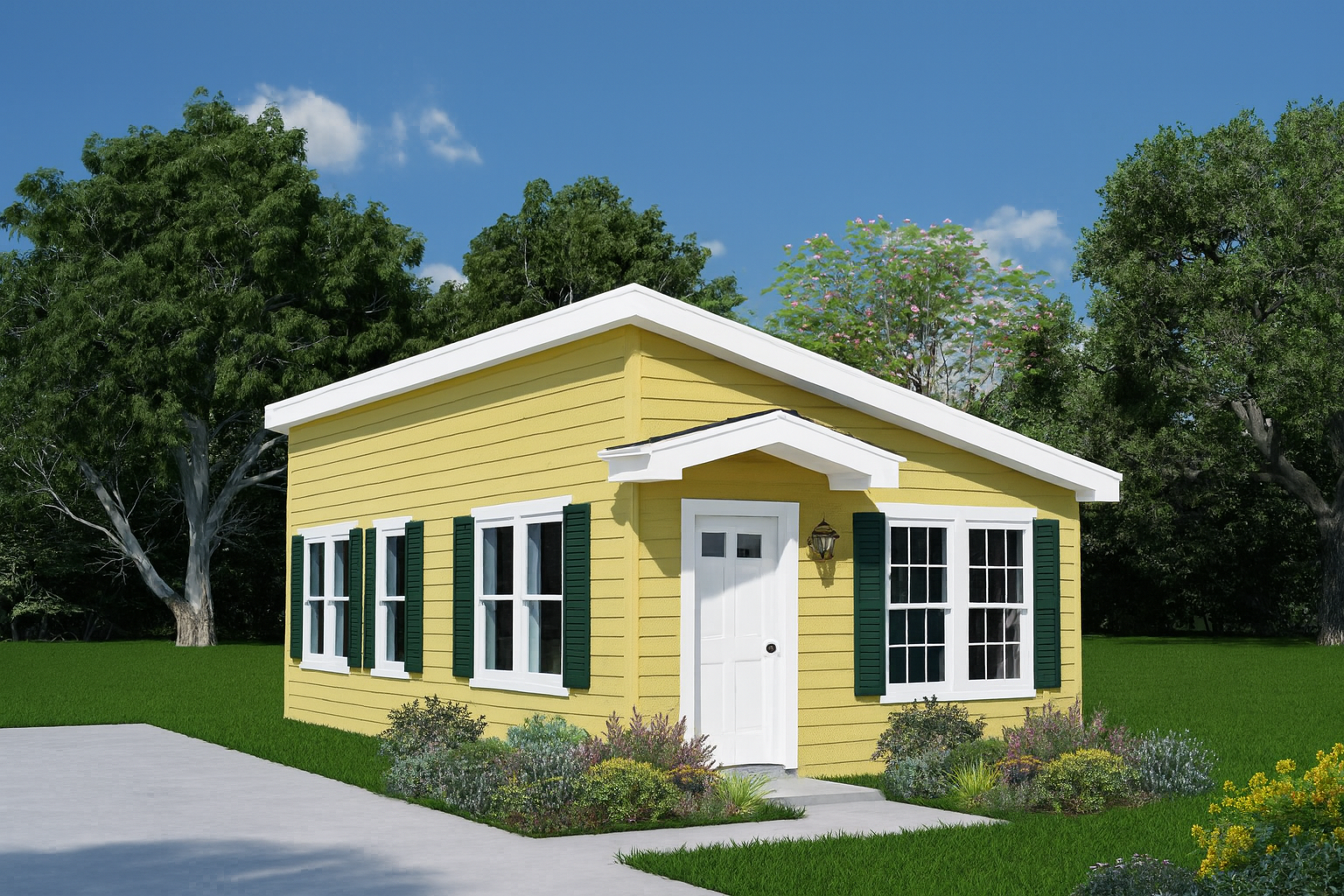
Why Home Nation may be a fit: Home Nation offers compact new construction options alongside manufactured, modular, and stick-built homes, giving buyers several construction types to compare in one place. Its current catalog includes a 390 square foot Studio and a 468 square foot Studio Plus. The 390 square foot model falls within the 400 square foot threshold referenced in Georgia's Tiny House Appendix, while the 468 square foot model exceeds it, so confirm which classification and local code path applies before ordering.
What to know:
-
Compact floor plans alongside full-size manufactured, modular, and stick-built options
-
Delivery and installation coordination across Georgia
-
Financing support for buyers who already own land or need land-and-home packages
Ready to compare compact floor plans delivered to your Georgia address? Browse Home Nation's stick-built and small floor plan options and get local pricing.
2. Mustard Seed Tiny Homes
Based in Buford, just outside Atlanta, Mustard Seed Tiny Homes builds both modular tiny homes intended for permanent foundations and park model homes that fall under more lenient zoning. Offering both classifications in one place makes them a useful stop for buyers still deciding which path fits their land.
3. Homestead Tiny House Co.
Located in Alpharetta, Homestead Tiny House Co. builds custom tiny homes along with she-sheds and similar small structures. Their catalog-plus-custom approach suits buyers who want a starting design they can still adjust to fit their needs.
4. Timbercraft Tiny Homes
Timbercraft Tiny Homes is based in Guntersville, Alabama, and serves the greater Southeast, including Georgia. Their builds have earned national recognition in the tiny house industry, which can appeal to buyers prioritizing craftsmanship and are comfortable working with a builder outside the state.
5. Hummingbird Tiny Housing
Operating out of Danville, Hummingbird Tiny Housing is one of the more established tiny house builders in the Southeast, building homes designed with mobility features like retractable porches. Their long track record suits buyers who want a builder with decades of specific tiny house experience.
Building Your Tiny Home in Georgia
Choosing a tiny home builder in Georgia comes down to matching your priorities, whether that is speed, customization, or budget predictability, with a builder who understands the state's county-by-county code landscape. Local and regional builders like Mustard Seed Tiny Homes, Homestead Tiny House Co., Timbercraft Tiny Homes, and Hummingbird Tiny Housing each bring a distinct craft approach. For buyers who want factory-backed pricing and a faster path from order to move-in, Home Nation pairs compact floor plans with the same delivery and installation support used across its manufactured, modular, and stick-built homes.
Frequently Asked Questions
Is it legal to build a tiny house in Georgia? It depends on your county or city. Georgia's Department of Community Affairs approved a statewide Tiny House Appendix based on IRC Appendix Q, but local jurisdictions must adopt it before it applies. Confirm adoption status with your county building department before finalizing plans.
Do I need a permit to build a tiny house in Georgia? Generally, yes, for homes on a permanent foundation. Permitting authority typically sits with your county or municipal building department, and requirements vary by location, so check locally before starting construction.
How much does a tiny home cost in Georgia? Costs vary significantly based on whether the home is factory-built or fully custom, the size, and the finish level. Factory-direct options tend to offer more predictable pricing than fully custom builds, though site work, delivery, and foundation costs add to the base price either way.
Can a tiny home be placed in a flood zone in Georgia? It depends on the specific flood zone designation and local elevation requirements. Check your parcel against FEMA's flood maps and confirm elevation and foundation requirements with your local building department before finalizing a lot.