When you're shopping for a manufactured home, you'll hear a lot about wind zones. It's not just technical jargon. Wind zone ratings determine what kind of home you can legally install in your area, and getting it wrong can mean your home won't pass inspection or meet local building codes. If you live in a low-wind area, you're likely in Wind Zone 1, which affects everything from pricing to which models you can choose.
Key Takeaways
-
Wind Zone 1 covers areas with wind speeds up to 70 mph, typically inland states with minimal hurricane or severe storm risk.
-
Homes built for Wind Zone 1 are less expensive because they require lighter structural reinforcement than higher-rated zones.
-
You cannot install a Wind Zone 1 home in areas designated as Wind Zone 2 or 3 due to safety and compliance regulations.
-
Most states in the Midwest and interior regions fall under Wind Zone 1 classification.
-
Understanding your zone helps you avoid costly mistakes when purchasing and installing a manufactured home.
What Is Wind Zone 1?
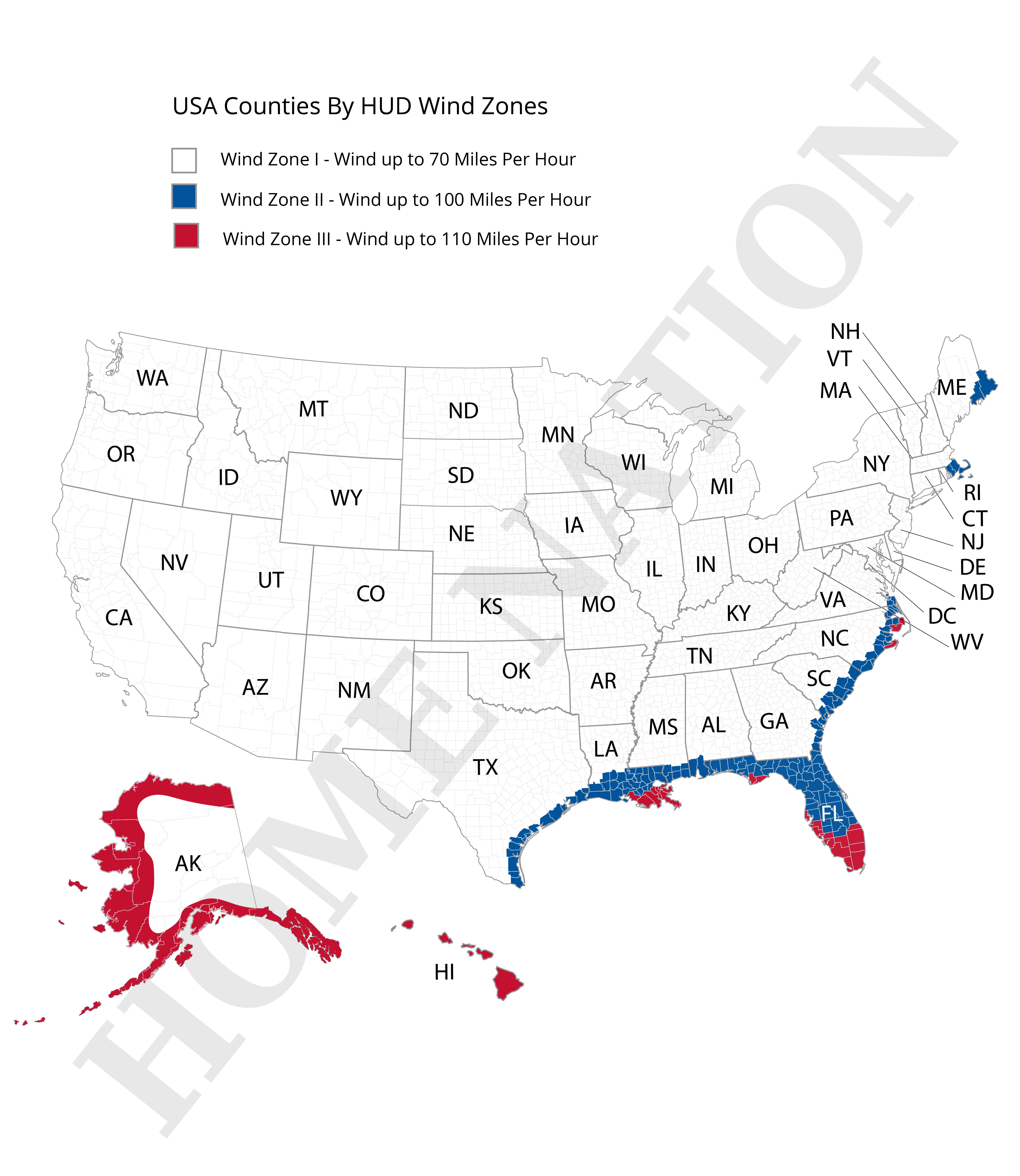
Wind Zone 1 refers to geographic areas where the maximum expected wind speed during extreme weather events is up to 70 miles per hour. The U.S. Department of Housing and Urban Development (HUD) established these classifications to ensure manufactured homes can withstand local wind conditions. Homes built for Zone 1 meet baseline structural standards, but they're not designed to handle the intense winds common in coastal or high-risk storm areas.
The rating isn't arbitrary. Engineers calculate it based on historical weather data, geographic location, and the likelihood of severe wind events. If you're buying a home in Kansas, Montana, or Nevada, chances are you're looking at Wind Zone 1 territory. The classification directly impacts the engineering and materials used during construction, which is why a Zone 1 home costs less than a Zone 2 or Zone 3 model.
Why Wind Zone 1 Matters for Mobile Home Buyers
Knowing your wind zone before you buy saves you from expensive headaches down the road. If you purchase a Wind Zone 1 home and try to install it in a Wind Zone 2 or 3 area, inspectors will reject it. You'll either need to return the home, retrofit it (which can be costly and complicated), or find a different location. Neither option is ideal when you've already invested time and money into the process.
Related: Getting An FHA Loan For Mobile Homes
On the flip side, buying a higher-rated home for a Zone 1 location means paying more for structural features you don't need. Wind Zone 1 homes are built to code for their intended areas, so there's no reason to overspend on reinforcements designed for hurricane-prone regions. Understanding your zone helps you match the home to your location without wasting money or risking compliance issues.
Financing can also be affected. Lenders want to know the home meets local building standards, and if your zone rating doesn't match your property location, it could complicate loan approval. When choosing land for your home, confirm the wind zone classification early in the process so you're not surprised later.
Which States Are Included in Wind Zone 1?
Wind Zone 1 covers most of the country's interior and northern regions. While the exact boundaries can shift slightly depending on updated wind data, the following states typically fall under Wind Zone 1:
-
Montana
-
Wyoming
-
North Dakota
-
South Dakota
-
Nebraska
-
Kansas
-
Oklahoma (northern and central areas)
-
Colorado
-
Utah
-
Nevada
-
Idaho
-
Arizona (northern regions)
-
New Mexico (northern regions)
-
Minnesota
-
Iowa
-
Wisconsin
-
Illinois
-
Indiana
-
Ohio
-
Michigan
-
West Virginia
-
Pennsylvania
-
New York (inland areas)
States with coastal exposure or higher hurricane risk generally fall into Wind Zone 2 or 3. If you're near the Gulf Coast, Atlantic Ocean, or Pacific Northwest coastline, expect a higher wind zone designation. Always verify your specific location with local building authorities, as county-level variations exist even within the same state.
Related: Getting Started With Conventional Loans For Mobile Homes
Wind Zone 1 Regulations and Compliance
Manufactured homes must comply with HUD's federal code, which includes wind zone requirements. A home certified for Wind Zone 1 has passed inspection and testing to confirm it can handle winds up to 70 mph. The HUD certification label, attached to every manufactured home, lists the wind zone rating along with other compliance details.
Installing a Zone 1 home in a higher-rated area violates building codes because the structure lacks the necessary reinforcements. This includes stronger roof trusses, additional tie-downs, and reinforced wall framing that homes in Wind Zones 2 and 3 require. Local inspectors check the HUD label during the permitting process, and if the wind zone doesn't match, they won't approve the installation.
If you're uncertain about your area's wind zone, contact your county's building or zoning department. They can confirm the designation and explain any additional requirements for manufactured home installations. Don't rely on assumptions. A quick phone call or email can prevent serious problems later.
The home inspection cost is another factor to consider when ensuring your home meets local standards. Inspectors verify that the home's wind zone rating matches the installation site, and catching mismatches early can save thousands in potential corrections.

Wind Zone 1 Mobile Homes at Home Nation
If you're shopping for a Wind Zone 1 home, Home Nation offers a wide selection of models built to meet Zone 1 specifications. Every home is factory-direct, which means you're getting transparent pricing without dealer markups. You can browse floor plans, customize features, and confirm the home matches your location's wind zone requirements before placing an order.
Buying a manufactured home involves more than picking a floor plan. You need to design a home that fits your lifestyle while meeting safety standards for your area. Visualizing your dream home before construction helps you make confident decisions about layout, features, and finishes. Whether you're working with a builder or customizing a new home through Home Nation, understanding your wind zone keeps the process smooth and compliant.
Wind Zone 1 homes offer an affordable entry point into homeownership without sacrificing quality. They're built to the same HUD standards as higher-rated homes, just with specifications suited to lower-wind areas. That means you're getting a safe, durable home at a price that reflects your region's actual needs.
Ready to Find Your Wind Zone 1 Home?
Shopping for a manufactured home can feel overwhelming, but understanding your wind zone simplifies the process. Wind Zone 1 covers most inland states, and homes built for this classification offer solid construction at a reasonable price. Whether you're a first-time buyer or upgrading to a larger model, knowing your zone helps you choose the right home without overpaying or running into compliance issues.
If you're ready to explore Wind Zone 1 mobile homes, contact Home Nation to discuss your options. You can get pre-approved for financing, review available inventory, and confirm which models meet your location's requirements. With factory-direct pricing and a straightforward buying process, finding the right home for your wind zone is easier than you think.