
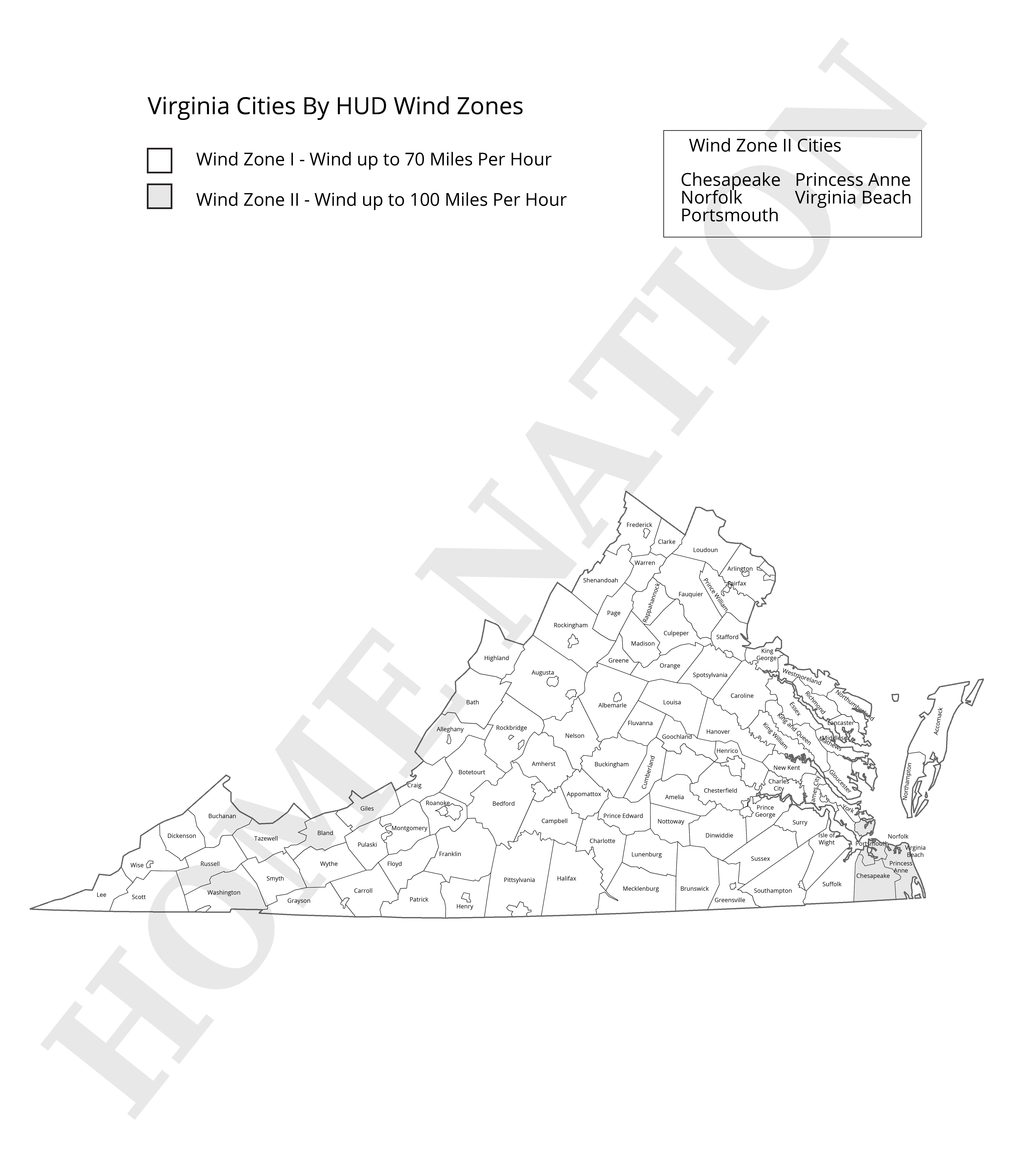
If you're buying a manufactured home in Virginia, understanding wind zones isn't optional. These designations determine how your home is built, anchored, and whether it can withstand the weather patterns where you plan to live. Virginia straddles two different wind zones, with coastal areas facing different requirements than inland regions.
What Are Wind Zones?
Wind zones classify areas based on maximum wind speeds during severe weather. HUD established these zones in 1976 as part of the Manufactured Home Construction and Safety Standards. The system divides the country into three zones, with each requiring specific home construction standards.
A home built for a lower wind zone can't legally be installed in a higher zone because it lacks the structural reinforcement needed to stay safe during high winds.

Virginia Wind Zones Explained
Virginia falls into two primary wind zones. Most of the state qualifies as Wind Zone 1, covering the inland and western regions. These areas must withstand winds up to 70 mph. This includes cities like Richmond, Roanoke, Charlottesville, and everything west through the Blue Ridge Mountains and Shenandoah Valley.
Wind Zone 2 covers Virginia's coastal communities, where manufactured homes must resist wind speeds up to 100 mph. The Virginia Construction Code specifically designates Chesapeake, Norfolk, Portsmouth, and Virginia Beach as Wind Zone 2 cities. Other Hampton Roads communities, the Eastern Shore, and areas along the Chesapeake Bay fall into this classification as well. These locations face increased hurricane risk and stronger sustained winds from nor'easters and tropical systems.
Virginia doesn't have any Wind Zone 3 areas. That highest classification, requiring 110 mph wind resistance, applies mainly to extreme coastal regions in states like Florida and the Carolinas.
Related: Manufactured, Modular, and Site-Built Homes: What's the Difference?
Why Virginia Wind Zones Matter
Wind zones affect multiple aspects of manufactured home ownership. First, they dictate structural specifications like wall thickness, roof pitch, anchor spacing, and tie-down requirements. A small mobile home built for Zone 1 uses different materials and construction methods than one rated for Zone 2.
Second, installing and setting up mobile homes requires following zone-specific anchoring guidelines. Zone 2 installations demand more ground anchors, stronger tie-downs, and closer spacing between attachment points. County inspectors verify compliance before issuing occupancy permits.
Insurance companies also factor wind zones into premium calculations. Higher zones mean higher replacement costs and increased risk, which translates to more expensive coverage. Some insurers won't cover Zone 2 homes at all without additional wind and hail riders.
Finally, wind zones affect resale value and mobile homes' affordability. A home built to Zone 2 standards costs more upfront but opens more installation locations and holds value better in coastal markets.

Virginia's Wind Patterns
Virginia experiences diverse weather that justifies these zone distinctions. Coastal areas face Atlantic hurricanes between June and November, with storms like Isabel (2003) and Irene (2011) causing significant Hampton Roads damage. These regions also see powerful nor'easters bringing sustained high winds and storm surge.
Inland Virginia sees different conditions. Severe thunderstorms and occasional tornadoes produce short wind bursts, but sustained hurricane-force winds are rare west of Interstate 95.
Related: Buyers guide to a USED mobile home
Virginia Wind Zone Mobile Homes
Buying the right home for your Virginia location starts with knowing your zone. Inland Virginia buyers need Zone 1 homes, while coastal buyers require Zone 2 construction for safety and code compliance.
Wind zone 1 counties:
Wind zone 2 counties:
Home Nation specializes in factory-direct manufactured homes built to meet every wind zone standard. Whether you need a modular home for the Shenandoah Valley or Zone 2 construction for Virginia Beach, we match buyers with compliant homes for their location.
Before purchasing, verify your exact zone classification with your county permitting office, especially near coastal boundaries. A home built to the wrong standard won't pass inspection.
Ready to find the right manufactured home? Get pre-approved to see your options, or sell or trade your home with Home Nation to make the transition easier.