Louisiana's coastal location makes understanding wind zones essential for anyone buying a manufactured home. The state experiences all three HUD wind classifications, and choosing the wrong rating can mean code violations, insurance issues, or worse.
Understanding Wind Zones
Wind zones are federal building standards set by the Department of Housing and Urban Development (HUD). They classify areas based on expected wind speeds and dictate how manufactured homes must be built. Created in 1976 and updated in 1994, these standards protect homeowners in regions prone to hurricanes and high winds.
When you look at mobile home wind zones, you'll see three classifications. Each one requires specific construction methods, anchoring systems, and materials. Getting this right matters for safety, insurance approval, and meeting local building codes.
.png)
Louisiana Wind Zones Explained
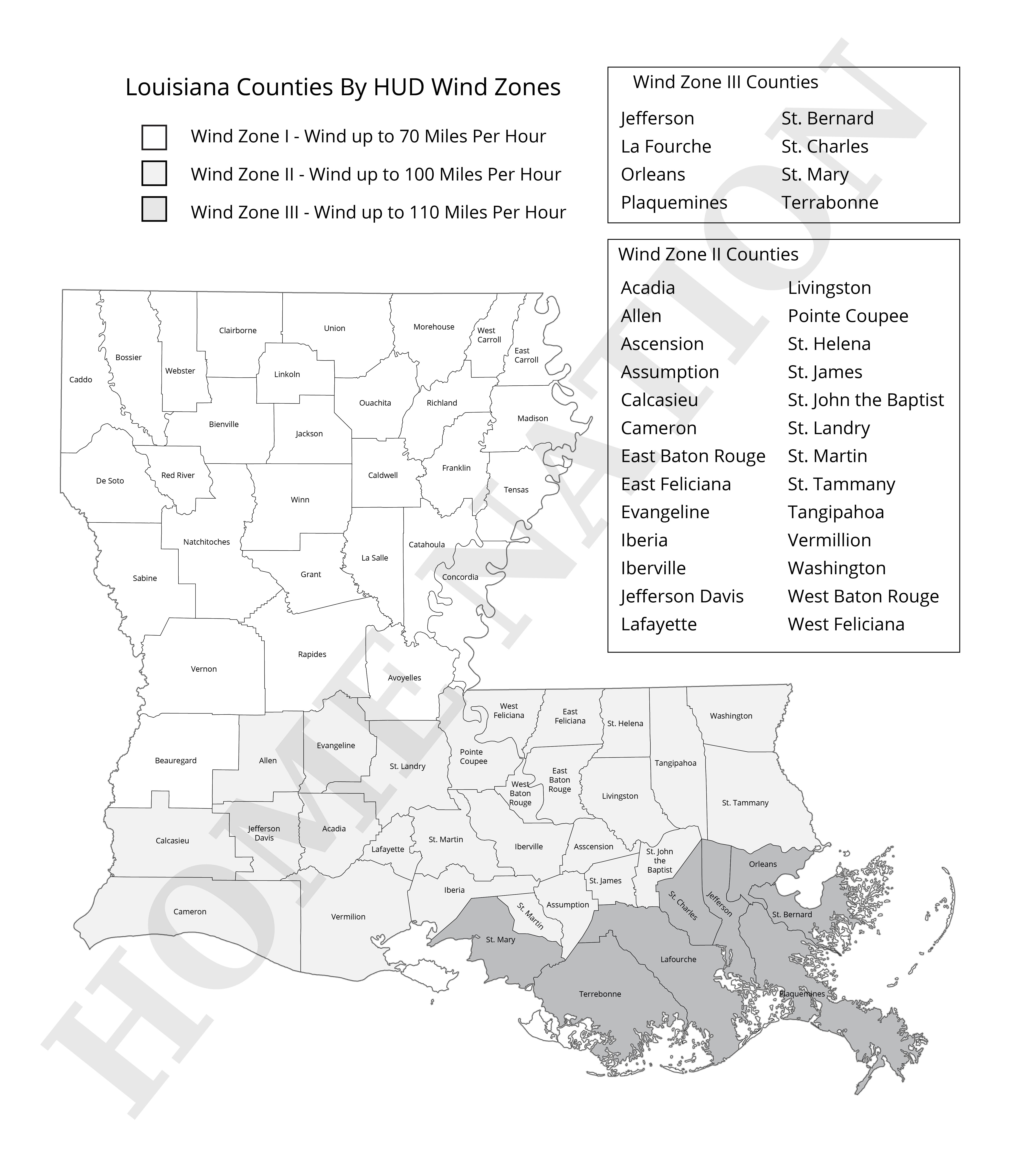
Louisiana wind zones span all three HUD classifications because of the state's unique geography. Coastal areas face direct hurricane threats, while inland regions see weakened storms.
Zone 1: Northern and Central Louisiana
Most of northern Louisiana, including Shreveport, Monroe, and Alexandria, falls into Wind Zone 1. Homes here must withstand winds up to 70 mph. These areas rarely face direct hurricane strikes because storms lose strength as they move inland.
Wind zone 1 counties:
Zone 2: Southern Interior Parishes
Wind Zone 2 covers a substantial portion of southern Louisiana, requiring homes built for 100 mph winds. Baton Rouge, Lafayette, and parts of Lake Charles sit in this zone. These areas see weakened hurricanes but still experience tropical storm force winds regularly. Most parishes along the Gulf Coast qualify as Zone 2 because storm surge and high winds remain threats even after landfall.
Wind zone 2 counties:
Related: What To Know About Windzones & Manufactured Homes
Zone 3: Coastal Louisiana
The southern coast, including parts of Terrebonne, Plaquemines, and Jefferson parishes, requires Wind Zone 3 construction. Homes must handle winds up to 110 mph. These areas take direct hurricane hits from the Gulf of Mexico. Properties in climate-threatened Louisiana coastal regions face some of the highest wind risks in the country.
Wind zone 3 counties:
Why Louisiana's Location Increases Risk
Louisiana's geography makes it particularly vulnerable to hurricane damage. The state's "corner" position where the Gulf Coast meets the Mississippi Delta creates conditions that amplify storm surge and wind speeds. Coastal parishes like Terrebonne and Plaquemines face nearly 50% odds of hurricane impact each season.
Warm Gulf waters fuel hurricane development, and Louisiana's low-lying terrain means storms maintain strength longer than in other states. Understanding your home's wind speed zone helps you prepare for these regional risks.
ALT Text:
How Wind Zones Affect Your Home Purchase
Buying the wrong wind zone rating causes real problems:
-
Installation delays if the home doesn't meet local requirements
-
Insurance complications or higher premiums
-
Safety risks during storms
-
Resale challenges if you need to move the home
You can place a higher-rated home in a lower zone (a Zone 3 home works in Zone 1), but never the reverse. Similar to hurricane-proof modular homes and hurricane-proof site-built homes, manufactured homes need proper ratings for their location.
Related: Find The Best Hurricane Proof House Plans Of The Year
Finding Your Home's Wind Zone Rating
Every manufactured home built after 1997 must display its wind zone on the HUD data plate. Check inside kitchen cabinets, bedroom closets, or near the electrical panel. If you can't locate it, contact the Institute for Building Technology and Safety to request documentation.
When shopping for a new home, ask your dealer about the specific wind zone requirements for your parish. Don't guess. Local building officials can confirm which zone applies to your property.
Louisiana Wind Zone Mobile Homes
Choosing a home that fits your area’s conditions is the foundation of building resilience. At Home Nation, every manufactured home is constructed to comply with all three HUD wind zone categories. From northern Louisiana’s Zone 1 to the coastal areas in Zone 3, buyers can find models engineered for Louisiana’s wind requirements and local safety codes.
Ready to find a home rated for your area? Get preapproved or learn how to sell your current home to upgrade to proper wind zone protection.
Understanding Louisiana wind zones protects your investment and your family. Take the time to verify requirements before you buy, and you'll have a home built to handle whatever storms come your way.