Florida sits directly in hurricane territory, and that makes wind zones matter more here than almost anywhere else in the U.S. Wind zones determine how your home needs to be built, what it can withstand, and whether it'll meet local building codes. Get it wrong, and you're looking at permit denials, insurance problems, or worse.
What Are Wind Zones?
Wind zones are geographic areas designated by the U.S. Department of Housing and Urban Development (HUD) based on expected wind speeds. The system was updated in 1994 after Hurricane Andrew caused massive damage across South Florida.
HUD created three zones:
-
Zone 1: Up to 70 mph winds
-
Zone 2: Up to 100 mph winds
-
Zone 3: Up to 110 mph winds
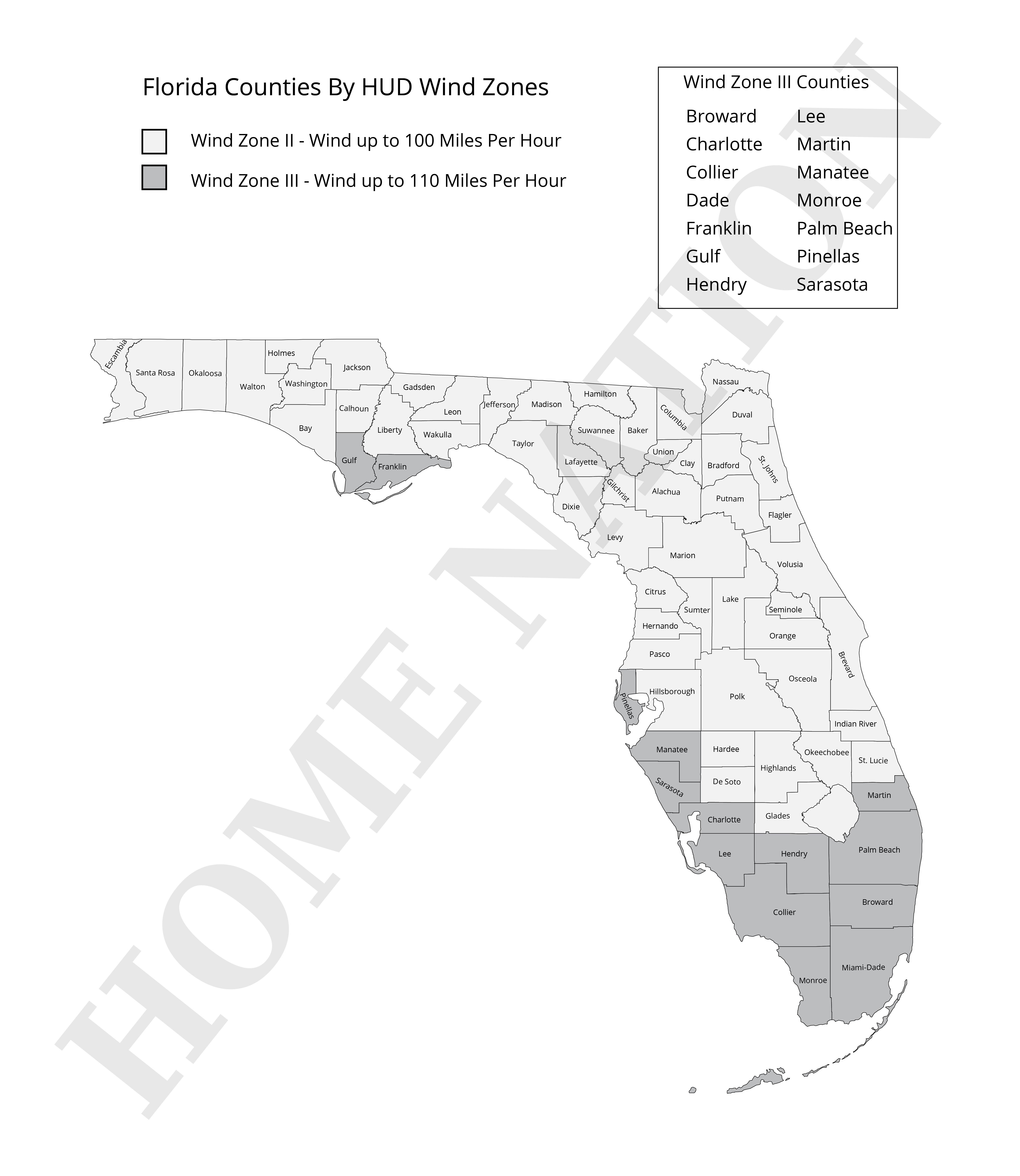
Florida doesn't have any Zone 1 areas. Every county falls into either Zone 2 or Zone 3. You can put a higher-rated home in a lower zone, but you can't do the reverse.
Related: Complete Guide to Mobile Home Zones by State
Why Wind Zones Matter
These zones exist for safety. Florida's climate brings tropical storms and hurricanes, and wind zones help ensure homes are built to survive them.
When you choose a mobile home in Florida, the wind zone rating affects materials and anchoring systems. Homes built for Zone 3 can handle up to 47 pounds per square foot of wind pressure. Zone 2 homes withstand 39 pounds per square foot and 100 mph sustained winds.
Building codes tied to Florida wind zones impact your insurance premiums, resale value, and permits. If your home isn't rated for the correct zone, you're violating HUD regulations.
.png)
Florida Wind Zones Explained
Florida is split between two zones. Understanding which applies to your location is critical before buying a mobile home in Florida.
Wind Zone 2
Most of Florida is Wind Zone 2. This includes northern and central parts of the state, plus inland areas. Homes must resist sustained winds up to 100 mph, strong enough to withstand a Category 2 hurricane.
Counties in Zone 2 make up about two-thirds of the state. If you're looking at property in Tallahassee, Gainesville, Orlando, or most of the Panhandle, you'll need Zone 2 compliance.
Wind Zone 2 counties:
Wind Zone 3
Wind Zone 3 covers South Florida, the Florida Keys, and select Gulf coastal areas. Homes must handle winds up to 110 mph.
For anyone installing a home in cities like Tampa, the Keys, Fort Myers, or Miami, it must meet Zone 3 construction standards.
How to Find Your Home's Wind Zone Rating
Every manufactured home built after 1994 must have a data plate listing the wind zone it was designed for.
Where to look:
-
Inside a kitchen cabinet
-
Inside a bedroom closet
-
Near the electrical panel
If you can't locate it, request a replacement from the Institute for Building Technology and Safety (IBTS).
The Florida building code is among the toughest in the country. South Florida's hurricane building code is considered one of the strongest in the world. Studies show no homes built after the 1994 HUD Code changes were destroyed during the four major hurricanes that hit Florida in 2004.
Related: Top 10 Mobile Home Dealers In Florida
Florida's Storm Patterns
Florida's geography puts it in the path of Atlantic hurricanes. The state has over 1,300 miles of coastline, and warm waters fuel tropical systems from June through November.
South Florida and the Keys face the highest risk. Even inland areas in Zone 2 can experience powerful storms. Comparing the cost to build a house in Florida with a manufactured home often shows significant savings, but only if you choose the right wind zone rating.
Florida Wind Zone Mobile Homes
When shopping for a manufactured home in Florida, wind zone compliance isn't optional. It's the law. Every home must be rated for the zone where it will be installed.
Home Nation offers factory-direct mobile homes built to meet HUD wind zone standards for both Zone 2 and Zone 3. Homes built for higher zones include stronger materials and reinforced anchoring systems.
Ready to take the next step?
Start with a preapproval to see what homes fit your budget. You can also sell your home through Home Nation's trade program.
Florida wind zones exist to protect you. Choose a home that's built for where you live. That decision could save your home when the next storm rolls in.