Manufactured homes need to suit the conditions they'll face once they reach their destination, and wind exposure can vary depending on where buyers plan to place them. Federal manufactured housing standards account for those differences through wind zones that establish design requirements for homes in different parts of the country.
For buyers, the benefits of wind zone rated manufactured homes become clearer when a property sits in an area with higher wind requirements. Checking the property's wind zone before choosing a home helps buyers focus on suitable models and reduces the chance of discovering a mismatch later in the purchasing process.
Wind Zones Connect the Home to Its Intended Location
HUD divides manufactured housing locations into Wind Zones I, II, and III according to the wind loads homes need to resist. Manufacturers use the applicable zone when designing a home, so its structural system meets the federal requirements for its intended destination.
Wind Zone I covers much of the country, while designated higher-wind areas fall within Zones II or III. Because those boundaries don't necessarily follow an entire state's borders, buyers need to check the designation that applies to the specific property where they plan to install the home.
Confirming that the zone early establishes one of the basic criteria for the home search. Buyers can then compare models that manufacturers designed for the conditions associated with their area.
Alabama Buyers May Encounter Different Wind Zones
Where someone buys property in Alabama affects which wind-zone designation applies. Under HUD's wind-zone map, most of the state falls within Wind Zone I, while Baldwin and Mobile Counties along the Gulf Coast fall within Wind Zone II.
That distinction makes county-level verification particularly useful for buyers considering homes in southern Alabama. Someone moving from an inland county to property near the coast shouldn't assume that a home suitable for the first property will meet the wind requirements for the second.
By checking the county before settling on a model, buyers can make the home's required rating part of the selection process from the beginning. This approach keeps the search focused on homes that suit the intended destination.
Higher Wind Ratings Affect How Manufacturers Build the Home
A wind-zone designation reflects how manufacturers design the home to handle wind forces; it isn't simply a classification added after construction. When a home needs to meet a higher wind-zone standard, its structural design must account for the greater wind pressures associated with that zone.
Manufacturers address those forces through the home's structural system and the connections that transfer wind loads through it. These design differences may not stand out when buyers look at a home exterior, which makes appearance an unreliable way to determine its rating.
Even two homes with similar floorplans could carry different specifications if manufacturers designed them for different wind zones. Buyers should therefore confirm the actual rating instead of assuming that comparable size or appearance means the homes meet the same standard.
The Correct Rating Prevents a Location Mismatch
Once buyers know the wind zone for their property, they can use it to narrow the available housing choices. A manufacturer may have designed a particular home for Wind Zone I, which means buyers can't assume that model also qualifies for placement in a Wind Zone II area.
Buyers who already own land have a straightforward starting point because the property's county can guide the search. Those still considering several properties can check the wind-zone designation for each area before committing to a home that may limit where they can place it.
Making that comparison early can prevent buyers from reaching a later stage of the purchase only to discover that their preferred home doesn't meet the standard for the intended site. It also gives dealers more useful information when helping buyers identify suitable models.
Check the Data Plate When Evaluating a Home
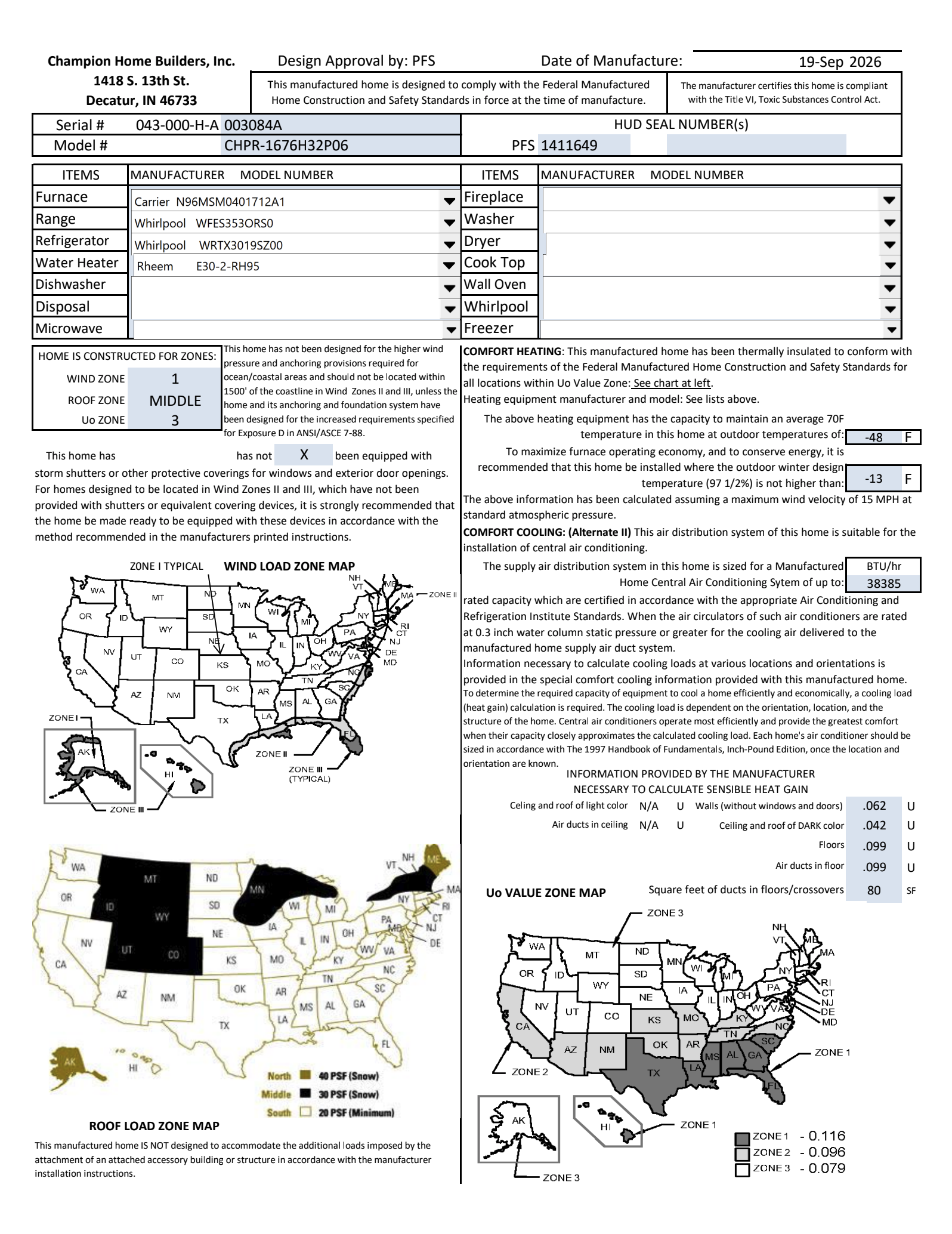
When buyers evaluate a specific manufactured home, they can check its data plate to confirm which wind zone the manufacturer designed it to meet. HUD requires the data plate inside the home to include wind-zone information and a map showing the applicable areas.
This verification becomes especially useful when someone considers a used manufactured home. Its current placement doesn't tell a prospective buyer whether the home design suits a different destination, so checking the documentation provides more reliable information than making assumptions based on where the home currently sits.
With the rating confirmed, buyers can compare the home specifications with the designation for the property under consideration. If the two don't align, they can continue searching before investing further in a home that won't suit the planned site.
Wind Rating and Proper Installation Work Together
The manufacturer's wind-zone design addresses how the home handles specified wind loads, but buyers still need proper installation once the home reaches the property. Installers must follow the standards that apply to the home and site, including applicable anchoring requirements.
Anchoring secures the manufactured home after crews complete the necessary setup. Alabama's installation requirements account for the state's wind-zone distinctions, so installers need to follow the provisions that correspond with the home's destination.
A higher wind rating doesn't remove the need for qualified installation or make setup requirements interchangeable between properties. Buyers should treat the home's design and its installation as connected parts of preparing it for the conditions at the site.
Wind Ratings Don't Replace Other Property Planning
Even after buyers confirm the correct wind-zone rating, the property still needs to accommodate the home. The rating answers a specific structural question about wind loads, while other aspects of the project depend on the site's individual conditions.
Site preparation and local installation requirements need separate attention before delivery. Buyers should work with the appropriate professionals to determine what their property requires without assuming that a suitable wind rating resolves every part of the project.
Keeping that distinction clear makes the planning process easier to manage. Buyers can address wind-zone compatibility while leaving property-specific preparation for the stages and professionals responsible for that work.
Choose a Manufactured Home Rated for Your Location
Recognizing the benefits of wind zone rated manufactured homes gives buyers a practical way to evaluate whether a home suits its intended destination before committing. Checking the applicable designation early can narrow the search while giving buyers clearer information to use when discussing potential homes with a dealer.
For buyers comparing manufactured homes for sale in Alabama, the property's county can determine which wind-zone rating the home needs. Home Nation can help buyers review available manufactured homes and find options suited to the area where they plan to live.
Sources
U.S. Department of Housing and Urban Development. “Manufactured Housing Homeowner Resources.” Accessed September 4, 2026. https://www.hud.gov/hud-partners/manufactured-home-resources.