
Ohio is one of the tougher states in the country for a permanent-foundation tiny house. The state has not adopted Appendix Q of the International Residential Code, and the Residential Code of Ohio is commonly interpreted by local jurisdictions to require a minimum living area of 950 square feet for a one-family dwelling. Many Ohio counties and cities enforce that minimum, though tiny houses on wheels sidestep it by being classified as recreational vehicles rather than permanent dwellings.
This list breaks down the tiny home builders worth calling in Ohio, starting with the option most buyers overlook.
Key Takeaways
-
Ohio has not adopted Appendix Q statewide, and many jurisdictions enforce a 950 square foot minimum for permanent one-family dwellings.
-
Tiny homes on wheels are generally classified as RVs, avoiding the 950 square foot minimum but limiting them to RV-park or campground-style use in many areas.
-
Some counties and cities have created their own exceptions or ADU rules that allow smaller footprints.
-
Confirm your jurisdiction's minimum floor area and ADU rules before choosing a floor plan.
How We Evaluated Ohio Tiny Home Builders
We looked for builders serving Ohio that offer tiny or compact homes and considered factors such as construction type, customization, Ohio availability, permanent foundation options, and the level of support provided for delivery, installation, or site preparation. Because Ohio's minimum floor area rules vary by jurisdiction, buyers should verify a builder's home can legally be placed on their specific property before ordering.
What to Check Before Choosing a Builder
Start by calling your local building department to ask about minimum floor area for a permanent one-family dwelling. Many Ohio jurisdictions apply the 950 square foot standard, ruling out a true under-400-square-foot tiny house as a standalone residence in those areas, though some allow smaller units as an accessory dwelling on a lot with an existing home. Ask the builder whether their homes are built for a permanent foundation, governed by the Residential Code of Ohio, or for wheels, which fall under RV standards instead.
Ohio's winters matter more here than in warmer states. Confirm insulation ratings and heating system sizing fit the climate, since a small footprint does not reduce the need for adequate insulation and a properly sized furnace or heat pump. Finally, check licensing status and ask for references from recent Ohio customers, not just a national portfolio.
Top Tiny Home Builders in Ohio
1. Home Nation
Why Home Nation may be a fit: Home Nation offers compact new construction options alongside manufactured, modular, and stick-built homes, giving buyers several construction types to compare in one place. Its current catalog includes a 390 square foot Studio and a 468 square foot Studio Plus. Because Ohio has not adopted Appendix Q and many jurisdictions enforce a 950 square foot minimum for a standalone permanent dwelling, these compact plans likely fit best as an accessory dwelling unit or in a jurisdiction with a specific exception, rather than as an automatic standalone residence. Confirm floor area rules with your local building department before ordering.
What to know:
-
Compact floor plans alongside full-size manufactured, modular, and stick-built options
-
Delivery and installation coordination across Ohio
-
Financing support for buyers who already own land or need land-and-home packages
Ready to compare compact floor plans delivered to your Ohio address? Browse Home Nation's stick-built and small floor plan options and get local pricing.


2. Modern Tiny Living
Based in Columbus, Modern Tiny Living builds tiny homes on wheels with lofted layouts and full kitchens, and has been featured on national television for its designs. Being built on wheels, these are generally classified as RVs in Ohio, sidestepping the 950 square foot minimum but coming with their own placement restrictions.
3. Maverick Tiny Homes
Located in New Paris, Maverick Tiny Homes specializes in fully custom tiny houses on wheels with a contemporary farmhouse style, backed by more than 20 years of construction experience. Their custom approach suits buyers wanting a one-of-a-kind design rather than a set catalog of floor plans.
4. Rulaco Tiny Homes
Rulaco Tiny Homes holds NOAH certification and focuses on energy-efficient, environmentally conscious builds. Their certification and industry involvement can offer extra assurance around construction quality and current tiny house standards.
5. Tiny Homes of Ohio
Tiny Homes of Ohio brings an Amish-influenced building tradition to its designs, emphasizing craftsmanship and a rustic, minimal aesthetic. Their hands-on, small-shop approach suits buyers prioritizing traditional construction methods over a fast factory turnaround.
Building Your Tiny Home in Ohio
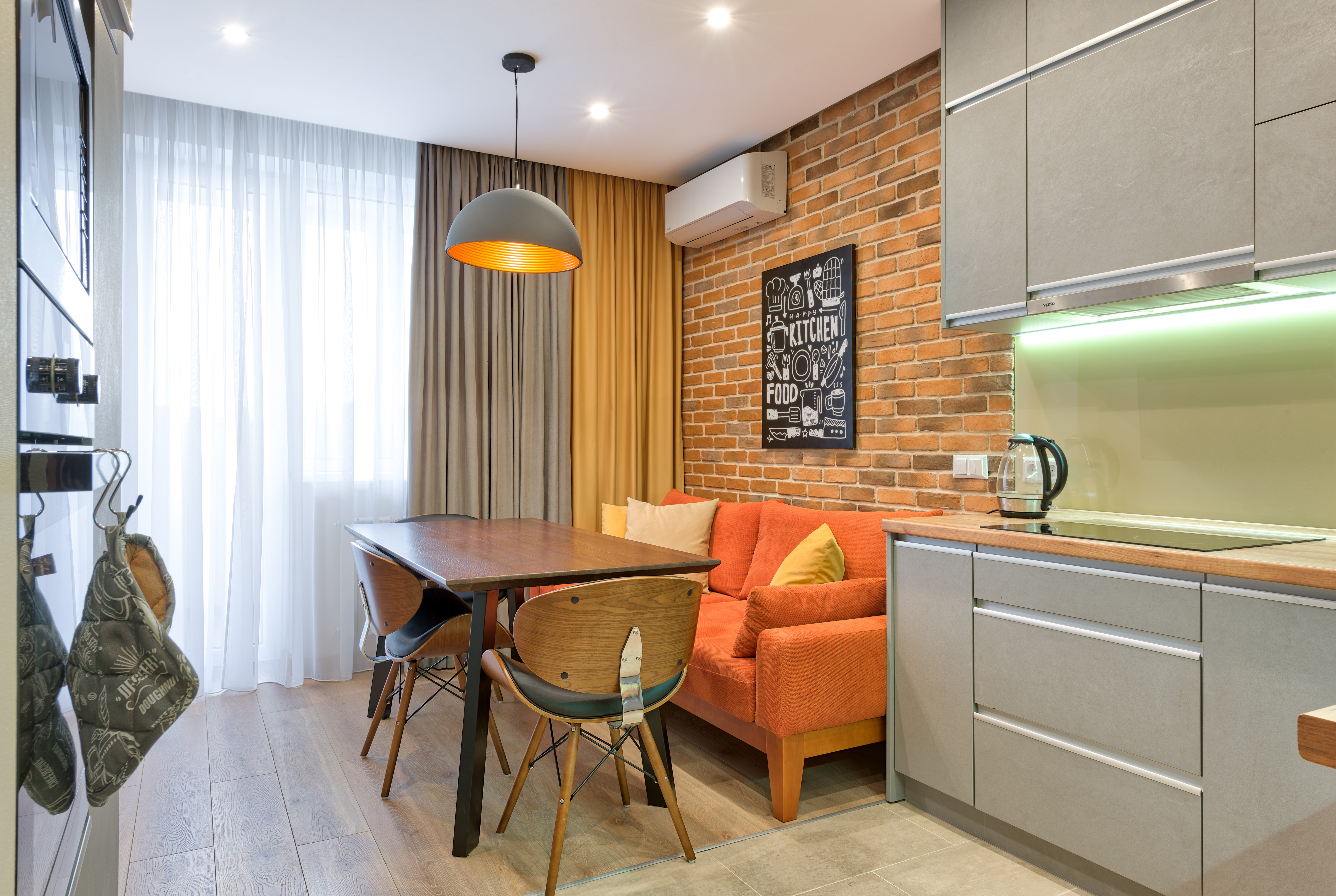
Choosing a tiny home builder in Ohio comes down to matching your priorities, whether that is speed, customization, or budget predictability, with a clear understanding of how the 950 square foot minimum and RV classification rules apply to your specific plan. Local builders like Modern Tiny Living, Maverick Tiny Homes, Rulaco Tiny Homes, and Tiny Homes of Ohio each bring a distinct craft approach, mostly centered on homes built for wheels. For buyers who want factory-backed pricing and a compact permanent-foundation option to discuss with their local building department, Home Nation pairs compact floor plans with the same delivery and installation support used across its manufactured, modular, and stick-built homes.
Frequently Asked Questions
Is it legal to build a tiny house in Ohio? It depends on the type and location. Tiny houses on wheels are generally legal as RVs, subject to placement rules that vary by jurisdiction. Tiny houses on permanent foundations must meet the Residential Code of Ohio, and many jurisdictions require a minimum of 950 square feet for a standalone dwelling, so confirm with your local building department first.
Can a tiny home be smaller than 950 square feet in Ohio? In some cases. Several counties and cities allow smaller footprints for accessory dwelling units on a lot with an existing home, and some jurisdictions have not adopted the 950 square foot minimum at all. Requirements vary, so verify locally before committing to a plan.
Do I need a permit to build a tiny house in Ohio? Generally, yes, for homes on a permanent foundation. Permitting authority typically sits with your county or municipal building department, and requirements vary by location, so check locally first.
How much does a tiny home cost in Ohio? Costs vary significantly based on whether the home is factory-built or fully custom, the size, and the finish level. Factory-direct options tend to offer more predictable pricing than fully custom builds, though site work, delivery, and foundation costs add to the base price either way.